What Are the Best China Zip Ties for Global Buyers?
Global buyers rarely need the cheapest zip ties. They need consistent performance across warehouses, climates, and production lines. A reliable product should hold firmly, release cleanly when required, and remain stable during storage. Material choice matters. Nylon 6/6 often performs well in general applications, while UV-stabilized grades suit outdoor exposure. Stainless steel options may serve demanding industrial environments, but they require different handling and cost planning.
The best China zip ties are not selected from photos alone. Experienced purchasing teams request samples, inspect locking teeth, and compare tensile strength reports. They also check width, length, bundle weight, color consistency, and packaging quality. A crushed carton can create problems long before installation. Supplier communication matters too. Clear drawings and repeatable specifications reduce avoidable misunderstandings. Factory audits, production records, and quality-control procedures can provide stronger evidence than attractive sales language.
Small details matter.
However, no supplier is perfect, and no test represents every real workplace. A tie that performs well indoors may become brittle under prolonged sunlight or severe cold. I have seen buyers focus on unit price while overlooking freight volume, rejected batches, and installation speed. That approach can become expensive. It is wiser to compare total value, documented quality, and technical support together. This guide examines practical criteria for choosing China-made zip ties with greater confidence, while recognizing that product selection still requires testing in the buyer’s own conditions.
What Types of China Zip Ties Are Available to Global Buyers?
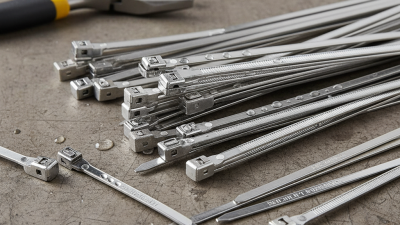
Global buyers can source several China zip tie types for different working conditions. Standard nylon 6/6 ties suit indoor wiring, packaging, and light assembly. Their molded teeth should engage cleanly without excessive hand force. UV-resistant versions use stabilized nylon for outdoor exposure, while heat-stabilized grades suit warmer equipment areas. Releasable ties help during maintenance. Push-mount and bead-style ties secure wiring to panels or frames. Identification ties include writing surfaces for maintenance records. Stainless steel ties provide greater resistance to heat, abrasion, and harsh environments. They cost more, but plastic is not always the sensible choice.
A recent Grand View Research report describes steady growth in the global cable ties market, supported by construction, automotive, and electrical installation demand. The report also highlights material performance and application conditions as important purchasing factors. Buyers should request tensile-strength data, operating-temperature ranges, UV-aging results, and dimensional tolerances. IEC 62275 can provide a useful reference for cable-management system requirements. Still, one laboratory result cannot represent every climate or installation method. I have seen low-cost ties fail after sharp bending, even when their packaging looked professional. That detail deserves attention. Ask for production samples, batch traceability, and independent test records before approving a large shipment. Salt exposure, sunlight, and repeated vibration may change the best choice.
Which Materials and Specifications Suit Different Applications?
For global buyers, the best China zip ties depend on material, load, and working conditions. Standard nylon 66 ties suit indoor cable bundling, packaging, and light equipment management. They are affordable, flexible, and easy to install. However, ordinary nylon can become brittle under strong sunlight or low temperatures.
For outdoor use, choose UV-resistant nylon with verified additive content and stable color. A black tie is not automatically UV-resistant. For high heat, check the supplier’s temperature range, not only the material name. Stainless steel 304 ties fit harsh, wet environments, while 316 offers better resistance near saltwater. Check width, length, minimum tensile strength, and locking-head design together. A longer tie is not always stronger.
Tips: Request samples first. Test them on actual cable bundles. Pull until failure. Leave samples outdoors when exposure matters. Ask for batch test records, material declarations, and dimensional tolerances. Packaging also deserves attention; damp storage can affect nylon performance. One practical mistake is choosing tensile strength from a catalog without considering sharp edges or repeated vibration. I have seen suitable-looking ties fail because the locking teeth were too shallow. Specifications should match the installation, not just the quotation.
What Are the Best China Zip Ties for Global Buyers?
Material selection by typical tensile strength and application suitability
Nylon 6/6
General-purpose indoor bundling, automotive assembly, appliances, and electrical installations. Typical tensile strength: 75–85 MPa.
UV-Stabilized Nylon 6/6
Outdoor cable management and solar installations. UV additives improve weather resistance while retaining high mechanical strength.
Polypropylene
Moisture-prone, chemical-contact, and low-cost applications. It offers lower strength than nylon but very low water absorption.
ETFE
High-temperature, chemical, and radiation-exposed environments. It provides strong weathering and chemical resistance.
304 Stainless Steel
Heavy-duty, high-temperature, outdoor, and fire-sensitive applications. Stainless steel provides the highest mechanical strength.
Values show representative material tensile-strength ranges converted to midpoint estimates. Finished zip-tie ratings depend on width, thickness, locking-head design, temperature, moisture, and manufacturing tolerances. Buyers should confirm the minimum loop tensile strength and relevant compliance requirements for the intended application.
How Should Buyers Evaluate Quality, Safety, and Compliance?
What Are the Best China Zip Ties for Global Buyers?
Quality starts with material evidence, not a low quotation. Ask whether the tie uses virgin or recycled nylon, and request the exact grade. Nylon 6/6 is common for electrical applications. Its performance can change under heat, ultraviolet exposure, and moisture. The 2024 Plastics Europe report recorded 7.1 million tonnes of recycled plastics available in Europe in 2022. That figure supports circular sourcing, but recycled content still requires batch testing.
Check tensile strength, loop retention, insertion force, operating temperature, and flame behavior. Request test reports linked to a specific production lot. The IEC 62275 standard provides a useful reference for cable ties used in electrical installations. Declarations should also address RoHS and REACH requirements. A certificate without material identification is weak evidence. Packaging should show size, quantity, production date, and traceability codes.
Safety testing should match the destination market and application. Outdoor buyers need UV and weathering results, not only indoor tensile data. The EU Safety Gate 2023 report recorded 3,412 product alerts across consumer categories. Cable ties were not the only concern, but the number shows why document review matters. Inspect samples personally: uneven teeth, sharp edges, brittle locks, or inconsistent color can signal process variation. I would not approve a supplier from one perfect sample. That decision is tempting, and sometimes wrong. A small pilot order, independent retesting, and corrective-action records provide stronger confidence.
What Manufacturing and Customization Options Do Chinese Suppliers Offer?
Chinese suppliers offer extensive manufacturing options for global buyers seeking dependable zip ties. Common materials include nylon 6/6, UV-resistant nylon, and heat-stabilized compounds. Each option suits different temperatures, moisture levels, and outdoor conditions. Ask for material data before placing a large order.
Customization can cover length, width, head design, locking strength, color, and packaging. Some factories produce printed markings or molded identification areas for cable management systems. Custom molds may support special shapes, mounting holes, or releasable locks. Buyers can usually request samples, tensile testing, color matching, and carton labels. Small details matter.
Experienced suppliers often provide production drawings, inspection records, and batch samples. A practical quality plan should check dimensions, locking performance, surface defects, and break resistance. Factory audits can reveal storage problems that documents may hide. Lead times also change when custom colors or molds are involved. Confirm raw material sources and approval procedures in writing.
No supplier gets every detail right. I have seen attractive samples fail during repeated bending tests. That is why trial orders deserve serious attention. 不
How Can Global Buyers Compare Suppliers, Prices, and Shipping Terms?
Global buyers should compare China zip tie suppliers by specifications, not catalog photos. Request the exact material, length, width, color, operating temperature, and minimum tensile strength. Nylon 6/6 is common, but grade and moisture control can affect performance. Ask for production samples from the same batch used for mass orders. Samples reveal more.
I have seen low quotes hide thinner straps, weaker locking teeth, or inconsistent dimensions. Request a factory profile, quality-control procedure, and recent test records. Useful evidence includes tensile testing, material declarations, and inspection photographs. Confirm whether the supplier handles injection molding internally or outsources it. Outsourcing is not automatically poor, but it adds another point to verify. Ask for evidence.
Compare prices on the same basis. A unit price may exclude packaging, printing, molds, inspection, or export handling. Build a landed-cost sheet with product value, carton quantity, freight, insurance, duties, and destination charges. Request quotations for several quantities, such as 10,000, 50,000, and 100,000 pieces. This shows whether a lower price depends on a large minimum order.
Shipping terms also require careful comparison. Check the agreed Incoterm, port or delivery location, lead time, carton dimensions, and payment schedule. Under an origin-based term, the buyer may arrange more transport steps. A delivered quote seems simpler, yet it can conceal unclear freight assumptions. Confirm who prepares commercial invoices, packing lists, and other routine shipping documents. Written details matter.