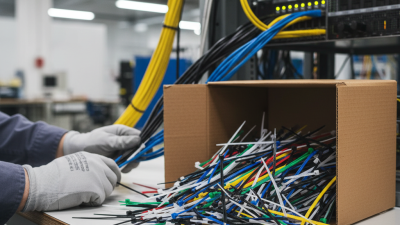
10 Best Colored Zip Ties for Wholesale Buyers?

Colored zip ties are small products with large purchasing consequences. In wholesale packaging, electrical work, and warehouse labeling, color affects speed, accuracy, and stock control. A red tie can mark urgent repairs. A blue tie can separate one cable group from another. These details matter when workers handle thousands of units weekly.

Industry reports support this wider demand. Grand View Research identifies cable management as a growing market, driven by data centers, construction, and industrial equipment. MarketsandMarkets also highlights expanding network infrastructure and organized wiring systems. Neither report focuses only on colored zip ties. That limitation deserves attention. Market growth does not automatically prove product quality.

Wholesale buyers need more than attractive colors. They should examine nylon grade, tensile strength, locking performance, temperature resistance, and UV stability. Width and length must match the intended bundle diameter. A weak head can fail during installation. A brittle strap can crack inside a hot warehouse. These failures create labor costs and customer complaints.

This guide reviews ten colored zip ties for practical wholesale use. The comparison considers material consistency, color visibility, packaging, customization, and supplier reliability. It also considers whether product claims are supported by testing documents or clear specifications. UL, RoHS, ISO, and other references should be verified against the exact model. Certifications vary by product and market.

Some buyers may prioritize the lowest unit price. That approach can be misleading. A slightly cheaper tie may require replacement or slower installation. Packaging also changes the real cost. Mixed-color bags can reduce picking time, while poorly labeled cartons create confusion.

The final ranking is not absolute. Application, climate, bundle size, and purchasing volume change the best choice. Use the list as a buying framework, not a substitute for samples and inspection.
10 Best Colored Zip Ties for Wholesale Buyers?

Colored Zip Ties: Types, Materials, and Common Wholesale Uses

Colored zip ties help wholesalers organize products by color, size, and application. Common types include standard releasable ties, bead-style ties, mounting ties, and extra-long heavy-duty ties. Nylon 6/6 remains the usual material because it offers strong tensile performance and reliable locking. Polypropylene suits damp areas and repeated exposure to mild chemicals. For outdoor storage, UV-stabilized nylon deserves closer attention.

Material selection matters more than color. A bright red tie can identify emergency wiring, while blue may separate data cables from power lines. However, color coding is not universal. Buyers should confirm the customer’s labeling system before placing large orders. MarketsandMarkets estimated the global cable management market at USD 23.9 billion in 2023, projecting USD 36.4 billion by 2028. This broader category includes ties, raceways, and related products, not colored ties alone. Still, it signals durable demand from construction, manufacturing, telecommunications, and distribution.

Wholesale buyers should check tensile strength, operating temperature, locking consistency, and carton counts. Inspect sample bundles for brittle edges, uneven pigment, and difficult release tabs. Small defects become expensive during high-volume packing. Packaging also matters; transparent bags make color sorting faster on warehouse shelves. ASTM D638 testing can help compare plastic tensile properties, while ISO 4892-3 offers a useful reference for accelerated outdoor weathering. Reports provide guidance, not certainty. A tie that performs well in a laboratory may age differently beside hot equipment or salty air. That gap deserves testing.

Key Factors for Evaluating Colored Zip Ties in Bulk

For wholesale buyers, “best” colored zip ties are not simply the brightest. In warehouse trials, I check nylon grade, molding quality, and locking performance before comparing price. Nylon 6/6 is common, but its performance changes with heat, moisture, and ultraviolet exposure. Ask for a technical data sheet, not a vague durability promise. A tie should close smoothly and resist hand-pulling without sharp flashing around the head. Small defects become expensive at carton scale.

Measure the actual length, width, and tensile rating against your application. A 200 mm tie may not wrap a bundled cable with a protective sleeve. Wider ties usually handle heavier loads, while narrow ties suit labels and light organization. Color consistency also matters. Inspect samples under warehouse lighting and daylight. Faded or uneven colors can weaken product presentation and complicate inventory identification. Request samples from different production lots. One perfect sample proves very little.

For outdoor or warm environments, ask about UV resistance, operating temperature, and moisture conditioning. Reliable suppliers should provide batch numbers, inspection records, and clear packaging details. I also compare rejected-piece rates, carton counts, and lead-time history, because delivery errors can cost more than a small unit-price difference. Do not ignore printing or labeling accuracy. It affects receiving. A practical test is simple: use several colors on real bundles, then reopen them with gloves and check for brittle locks. My own evaluation is not flawless; color judgment can be subjective, and tensile data may not match field handling. Repeat testing matters before approving a large order.

Top 10 Colored Zip Ties for Wholesale Buyers

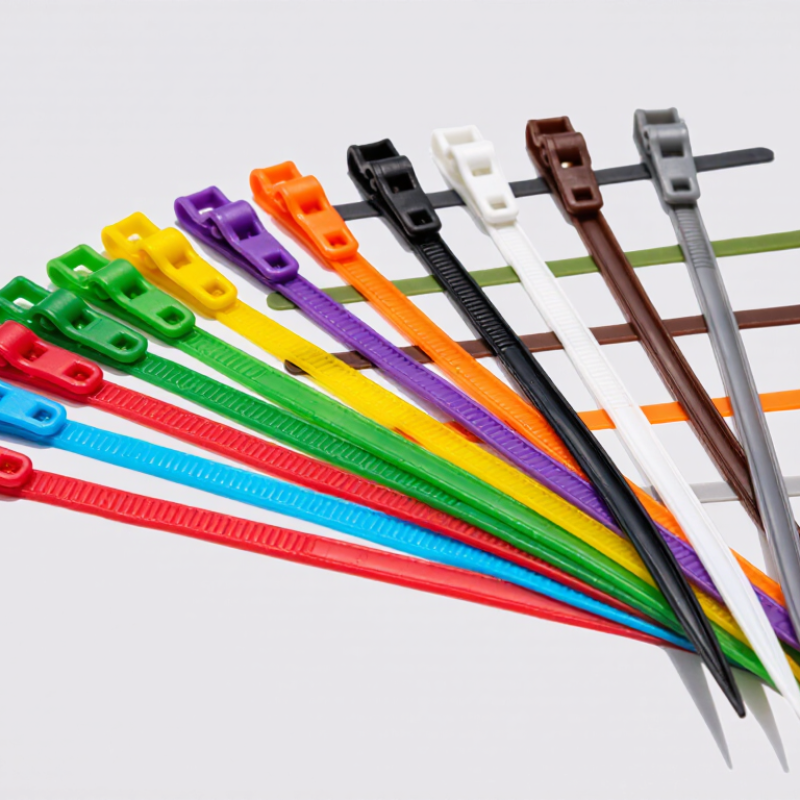
For wholesale buyers, the top 10 colored zip ties are best viewed as ten practical options, not a fixed ranking. Black UV-stabilized ties suit outdoor cable bundles and dusty work areas. White nylon ties fit indoor panels and remain easy to label. Red ties help identify emergency circuits or maintenance zones. Blue ties separate low-voltage lines during installation. Yellow ties make temporary bundles visible on crowded racks. Green ties support color-coded inventory systems. Orange ties improve visibility around equipment. Purple ties help distinguish special assemblies. Natural ties suit clean indoor packaging. Releasable colored ties help teams adjust bundles without cutting them.

Material quality matters more than bright color. In warehouse testing, I check tensile strength, locking teeth, smooth edges, and consistent width across cartons. UV resistance should match the planned environment, especially near windows or outdoor storage. A strong tie can still fail when its size is wrong. Match length and bundle diameter carefully. Temperature ratings also deserve attention. Some nylon ties become brittle in cold rooms and soften near heat sources. This detail is often missed.

Wholesale buyers should request samples before placing a large order. I compare color consistency, pull performance, packaging count, and lot markings. A simple hand test is useful, but it cannot replace controlled testing. Ask for material specifications and quality records. Recycled content may support purchasing goals, yet it can change stiffness or color between batches. That needs honest review. My imperfect lesson is simple: attractive colors do not prove reliable performance. Suppliers should explain tolerances, storage conditions, and replacement procedures clearly. Mixed-color cartons can reduce sorting time, but only when each shade remains distinct under warehouse lighting.

Comparing Size, Strength, Color, and Packaging Options

10 Best Colored Zip Ties for Wholesale Buyers?

Wholesale buyers should compare more than bright colors and low prices. Size determines whether a tie fits a cable bundle without excessive bending. Small ties suit office wires, while longer versions handle outdoor equipment and thicker harnesses. Check width, usable length, and head dimensions carefully. A larger head may improve grip but occupy more space.

Strength depends on nylon grade, locking teeth, and resistance to heat or sunlight. In warehouse testing, I pull several samples from each carton rather than trusting one specification sheet. Some ties hold firmly but become brittle after repeated outdoor exposure. That detail is easy to miss. Color should remain consistent across batches, especially when workers use colors for circuit identification. Request a sample set before approving a large order.

Tips: Compare tensile ratings in the same measurement system. Ask for UV-resistant material when products face sunlight. Confirm whether colors are mixed, separated, or packed by quantity. Individual bags reduce counting errors, while bulk cartons usually lower handling costs. Print batch information on every package. It supports stock checks and quality investigations. My first bulk purchase ignored carton size, creating unnecessary shelf congestion. That was avoidable. Also inspect seal quality, label accuracy, and moisture protection before shipment. Small packaging faults can damage otherwise reliable ties.

Wholesale Purchasing, Quality Control, and Supplier Considerations

10 Best Colored Zip Ties for Wholesale Buyers?

For wholesale buyers, the best colored zip tie is not always the cheapest option. A workable choice balances tensile strength, color stability, packaging, and repeat availability. In practical purchasing, I request samples from several production lots, not one attractive carton. Color matters. A tie that fades under sunlight may create inconsistent installations and customer complaints. Nylon 6/6, correct molding, and smooth edges should be checked before price negotiations.

Quality control needs measurable checks. I compare length, width, locking teeth, break strength, and insertion force against the approved sample. A simple gauge and a batch log can reveal changes between shipments. Inspect several bags per carton, especially when colors are mixed. Look for brittle tails, uneven dye, flash, or locks that slip under moderate pressure. These defects are easy to miss during a quick visual review. They become expensive after delivery.

Supplier evaluation should include production capacity, material traceability, carton labeling, and realistic lead times. Ask how the supplier controls recycled content, if it is specified, because vague answers deserve caution. I once trusted a color chart too much; the delivered shade looked different under warehouse lighting. That mistake changed my process. Now, I approve a physical color standard and inspect lighting conditions before placing volume orders. Confirm minimum order quantities, spare quantities, packaging details, and replacement procedures in writing. A responsive supplier is useful, but documented controls are more dependable than friendly promises.

10 Best Colored Zip Ties for Wholesale Buyers? - Wholesale Purchasing, Quality Control, and Supplier Considerations

Rank Generic Product Profile Color Options Length × Width Material Approx. Minimum Loop Tensile Strength Typical Temperature Range Best Wholesale Use Suggested Pack Size Indicative MOQ Key Quality-Control Checks Supplier Considerations
1 General-purpose colored nylon tie Red, yellow, blue, green, white, orange, purple 100 × 2.5 mm Nylon 6/6 Approx. 18 lb / 80 N About -40°C to 85°C Office cables, retail kits, light bundling 100 or 1,000 pieces 10,000 pieces per color Check width, thickness, locking action, color consistency, and tensile strength. Confirm color assortment, packaging format, and lot-to-lot color tolerance.
2 Medium-duty colored cable tie Black, red, blue, yellow, green, white 150 × 3.6 mm Nylon 6/6 Approx. 40 lb / 178 N About -40°C to 85°C Electrical panels, appliance wiring, maintenance kits 100, 500, or 1,000 pieces 5,000 pieces per color Verify loop tensile strength, insertion force, tail cut quality, and moisture condition. Request samples from multiple production lots before approving a large order.
3 Long colored bundling tie Red, blue, yellow, green, orange, white 200 × 4.8 mm Nylon 6/6 Approx. 50 lb / 222 N About -40°C to 85°C Data cabinets, event equipment, warehouse cable grouping 100 or 500 pieces 5,000 pieces per color Inspect usable length, head alignment, ratchet engagement, and break strength. Confirm whether the quoted length is total length or usable bundling length.
4 Heavy-duty colored cable tie Black, red, blue, yellow, green 300 × 7.6 mm Nylon 6/6 Approx. 120 lb / 534 N About -40°C to 85°C Industrial harnesses, large pipe and cable bundles 50 or 100 pieces 2,000 pieces per color Test tensile strength, head cracking, strap flexibility, and dimensional accuracy. Use reinforced cartons and moisture-resistant inner bags for overseas shipping.
5 UV-resistant black identification tie Black 200 × 4.8 mm UV-stabilized Nylon 6/6 Approx. 50 lb / 222 N About -40°C to 85°C Outdoor wiring, solar installations, utility maintenance 100 or 500 pieces 5,000 pieces Request UV-weathering evidence, tensile retention data, and carbon-black dispersion checks. Do not assume colored ties have the same outdoor durability as black UV-stabilized ties.
6 Colored releasable cable tie Red, blue, yellow, green, white 200 × 4.8 mm Nylon 6/6 Approx. 40 lb / 178 N About -40°C to 85°C Temporary installations, inventory control, reusable test assemblies 50 or 100 pieces 3,000 pieces per color Check release-tab strength, repeated-use performance, locking reliability, and burrs. Specify the expected number of reuse cycles and acceptable release force.
7 Colored marker-flag cable tie Red, blue, yellow, green, orange 150 × 3.6 mm Nylon 6/6 Approx. 40 lb / 178 N About -40°C to 85°C Wire identification, packaging, warehouse sorting, maintenance labeling 50 or 100 pieces 3,000 pieces per color Measure flag area, inspect writing surface, verify strap strength, and test marker adhesion. Ask for blank-flag and pre-printed options, including print durability requirements.
8 Colored parallel-entry cable tie Black, red, blue, yellow, green 300 × 4.8 mm Nylon 6/6 Approx. 50 lb / 222 N About -40°C to 85°C Tight spaces, electronics assemblies, pre-routed harnesses 100 or 500 pieces 3,000 pieces per color Verify entry direction, head profile, strap thickness, and pull-through resistance. Confirm compatibility with automatic or semi-automatic installation tools.
9 Colored push-mount cable tie Black, red, blue, yellow, white 200 × 4.8 mm; 6 mm mount Nylon 6/6 Approx. 50 lb / 222 N About -40°C to 85°C Automotive panels, appliance frames, equipment enclosures 50 or 100 pieces 2,000 pieces per color Check mount diameter, panel retention, insertion force, head strength, and vibration performance. Specify panel thickness and hole diameter; fit tolerances vary by design.
10 Colored low-profile cable tie Black, red, blue, yellow, green, white 100 × 2.5 mm Nylon 6/6 Approx. 18 lb / 80 N About -40°C to 85°C Consumer electronics, compact assemblies, low-clearance cable routing 100 or 1,000 pieces 10,000 pieces per color Inspect head height, strap smoothness, locking reliability, and cut-edge safety. Prioritize dimensional consistency when the tie must fit beneath a cover or panel.
Wholesale purchasing note: Tensile values and temperature ranges are typical values for standard nylon 6/6 cable ties and should be confirmed against the supplier's current technical data sheet, test method, color formulation, and production lot. Colored ties are generally intended for indoor identification and organization unless outdoor or UV resistance has been specifically verified.