2026 Best Plastic Ties for Global Buyers?
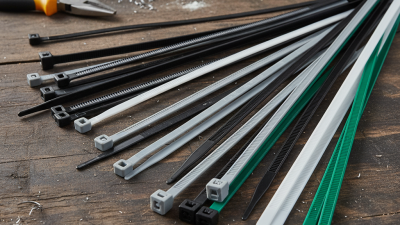
Choosing the best plastic ties in 2026 is not simply a matter of comparing prices. Global buyers need dependable performance across warehouses, construction sites, farms, workshops, and export packaging.
A strong tie should lock firmly, resist pulling, and remain stable under heat, moisture, and sunlight. The small details matter. A smooth edge protects cables and hands. A wide head improves grip. Consistent molding reduces failed installations and waste. Nylon 6/6 remains a common choice, but recycled content, UV resistance, and temperature ratings deserve closer inspection.
Polymer specialist Dr. Ramani Narayan offers a valuable reminder: “Biodegradability is a system property, not a material property.” That principle applies to plastic ties. Environmental claims should include real disposal conditions, not only attractive labels. Buyers should request technical datasheets, test results, batch information, and clear warranty terms. Trust requires evidence.
This guide compares plastic ties by strength, material quality, application, climate exposure, packaging efficiency, and supplier reliability. It considers reusable options, releasable designs, heavy-duty models, and ties suited to outdoor use. It also examines practical concerns, such as brittle locking heads, uneven lengths, and oversized packaging.
No single product fits every market. That is the difficult part. A tie that performs well in a dry warehouse may fail under tropical sunlight. Price can also mislead buyers when replacement labor is ignored. Some recommendations may seem conservative, and they should be questioned. Real purchasing decisions depend on testing, local conditions, and honest supplier communication.
Plastic Tie Types: Nylon 6/6, PP, PVDF, and Specialty Materials
2026 Best Plastic Ties for Global Buyers?
Plastic Tie Types: Nylon 6/6, PP, PVDF, and Specialty Materials
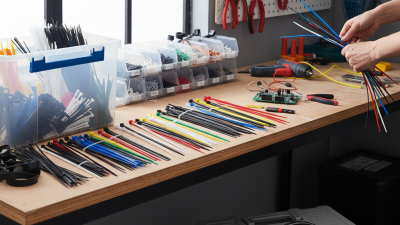
Choosing a plastic tie starts with the working environment, not the lowest price. In field inspections, Nylon 6/6 remains a practical choice for indoor panels, cable bundles, and equipment rooms. It offers good strength, clean installation, and broad availability. However, standard nylon can absorb moisture and lose performance in wet conditions. That detail is easy to overlook.
Polypropylene, or PP, suits damp areas and chemical contact better than ordinary nylon. It is lightweight, flexible, and often useful for temporary or low-load bundling. Its lower stiffness can become a weakness under vibration. Nylon 6/6 usually holds tension more firmly. The right choice depends on load, temperature, and exposure time.
PVDF serves demanding applications involving heat, sunlight, and aggressive chemicals. It costs more, so using it everywhere makes little sense. Specialty materials may include UV-stabilized nylon, flame-retardant compounds, or low-temperature grades. Buyers should request test data, material declarations, and sample verification before ordering large volumes. A supplier’s catalog is helpful, but it is not proof of field performance. I have seen technically suitable ties fail because the locking head was poorly matched to installation tools. Small details matter. When conditions are uncertain, run a short outdoor and chemical-exposure trial. My own preference is to document failures, too; they often reveal assumptions that specifications hide.
Outdoor Durability: UV Testing Under ISO 4892 and Moisture Resistance
2026 Best Plastic Ties for Global Buyers?
Outdoor plastic ties face sunlight, rain, heat, and repeated temperature changes.
UV resistance should be tested, not assumed from a bright color or thick appearance. ISO 4892 evaluates accelerated weathering through controlled light, heat, and moisture exposure. Buyers should request the exact method, exposure duration, cycle settings, and tensile-retention results. These details make comparisons more reliable.
Moisture resistance deserves equal attention.
During testing, condensation or water spray can reveal swelling, surface cracking, and weakened locking heads. After exposure, inspect flexibility, elongation, clamp security, and break force.
A tie may still look acceptable while becoming dangerously brittle. In practical outdoor evaluations, dark surfaces can heat quickly, especially on metal fencing or rooftop equipment. That extra heat may accelerate aging beyond ordinary garden conditions. No laboratory test perfectly predicts every climate, and this limitation deserves honest consideration.
Tips:
Ask for pre- and post-exposure tensile data. Check performance after UV and moisture cycles, not separately only. Examine samples after bending them in cooler conditions. Small cracks around the locking head often appear first. Request production-batch records and storage guidance. Even strong test results cannot replace a site-specific trial. A coastal installation, for example, may need longer observation because salt, wind, and sunlight interact in unpredictable ways.
Compliance Screening: UL 94, RoHS, REACH, and Halogen-Free Requirements
2026 Best Plastic Ties for Global Buyers?
Compliance screening should begin before comparing price or tensile strength. Ask for the resin type, production lot, and current test documents. UL 94 indicates flame behavior, but it does not automatically certify the complete plastic tie. A V-0 rating may apply only to a tested material thickness. That detail is easy to miss.
Tips: Request a signed RoHS declaration, REACH SVHC statement, and halogen-free specification. Check report dates, laboratory scope, sample descriptions, and matching product codes. Do not accept “compliant” as enough evidence. Keep documents with each purchase order.
RoHS screening should address restricted substances in the finished tie, including pigments and additives. REACH reviews substances of very high concern and may require supply-chain communication. Halogen-free claims need a stated threshold for chlorine and bromine. Definitions can differ between industries and buyers. A supplier’s declaration helps, but independent testing gives stronger confidence. Consider XRF screening for incoming lots, then use laboratory analysis when results look unusual. In practice, paperwork may describe one resin while production uses another. That mismatch needs investigation, not assumption. Compliance is also not permanent; formulations, suppliers, and recycled content can change. A practical buyer should review evidence regularly and retain traceable records.
Global Buyer Scorecard: MOQ, Unit Cost, Carbon Data, and Supplier Traceability
2026 Best Plastic Ties for Global Buyers?
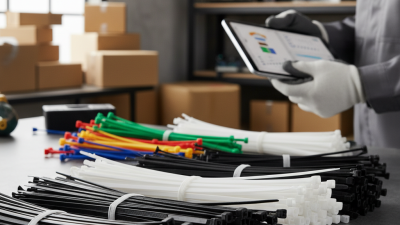
The best plastic ties are not always the cheapest. A practical scorecard should compare MOQ, unit cost, carbon data, and supplier traceability. Ask for pricing at three volumes, such as 10,000, 50,000, and 200,000 pieces. This reveals whether a low opening price remains competitive after production scales. Include tooling, packaging, freight, and inspection costs. A carton of ties can look inexpensive until shipping adds unexpected weight.
Request material specifications, tensile-test results, and batch-level quality records. Reliable suppliers should identify resin origin, production dates, and lot numbers. Carbon information deserves careful checking. Separate measured emissions from estimates, and ask whether the calculation covers raw materials, manufacturing, and transport. Recycled content can reduce impact, but percentages need supporting records. Claims without evidence are weak.
Tips: Keep a simple scorecard with weighted categories. Give traceability and safety more weight than a tiny price difference. Request one production sample before approval. Photograph the packaging and record the lot code. My own scoring is not perfect; supplier data may change between audits. Recheck major figures yearly. Also, do not assume a smaller MOQ is better, because frequent shipments may increase cost and emissions.
2026 Best Plastic Ties for Global Buyers
Global Buyer Scorecard: MOQ, Unit Cost, Carbon Data, and Supplier Traceability
This indicative 2026 benchmark compares common plastic-tie material options using practical sourcing metrics.
Lower MOQ, unit cost, and cradle-to-gate carbon intensity are generally more favorable, while higher traceability coverage indicates stronger documentation of resin origin, production location, and recycled content.
Benchmark basis: representative international B2B purchasing ranges for standard cable ties, using a 100 mm to 200 mm tie size range.
Actual figures vary by specification, order volume, certification, packaging, freight terms, and supplier disclosure quality.