Top 10 Best Wearable Technology Rings to Buy

A Wearable Technology Ring brings health tracking to a small band worn on the finger. It can measure sleep patterns, heart rate, skin temperature, and daily activity. For many people, that means useful data without a bright screen on the wrist. Small does not mean simple.

The market is growing. Grand View Research estimated the global smart ring market at $314.5 million in 2023, and projected an 18.8% compound annual growth rate from 2024 to 2030. These are market estimates, not guarantees of future sales. Still, they help explain why more brands are entering the category. Oura CEO Tom Hale has described the product’s role this way: “We’re not a medical device.” That distinction matters. A ring can support personal wellness tracking, but its readings should not replace professional medical advice.

This guide compares ten rings by comfort, battery life, app features, compatibility, and value. We consider practical details, too: whether the ring feels bulky while gripping a bicycle handlebar, or whether its charger is easy to pack. No single model suits every finger, routine, or budget. Some features sound impressive but may matter little after the first week. The rankings aim to make those trade-offs clearer, while recognizing that sensor accuracy and app quality can vary. Check sizing and return policies before buying; a ring that fits poorly is unlikely to become a useful daily companion.
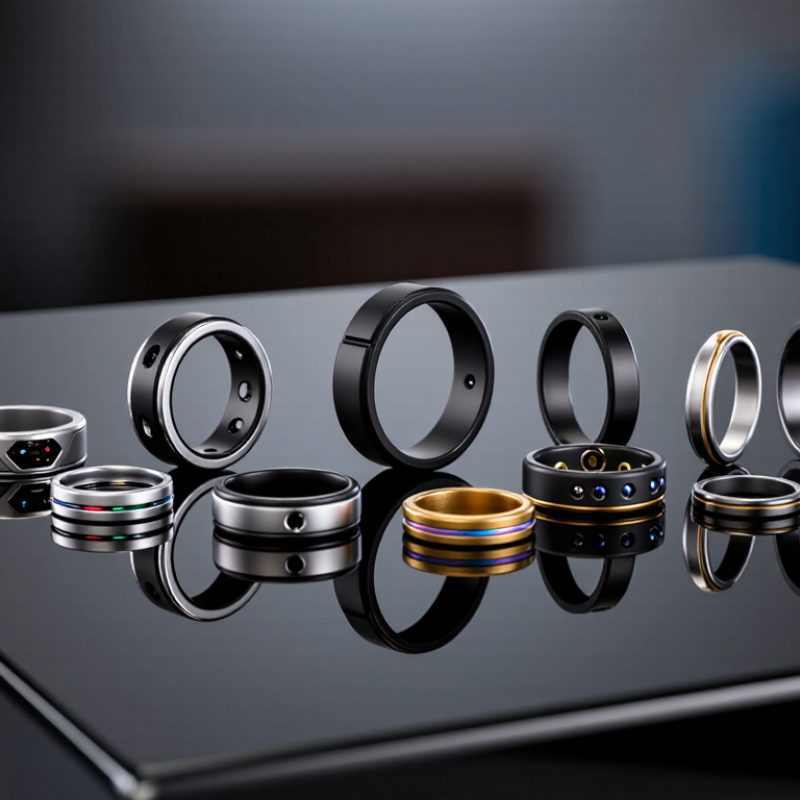
Top 10 Best Wearable Technology Rings to Buy

What Wearable Technology Rings Are and How They Work

Wearable technology rings are compact computers worn on a finger. They use small sensors to estimate signals such as pulse, movement, and skin temperature. A light-based sensor shines through the finger and measures changes in reflected light as blood flows. An accelerometer records movement, while temperature readings can show changes from your usual baseline. Tiny parts, steady tracking.

The software combines these signals to estimate activity, sleep patterns, and recovery trends. Sleep stages are estimates, not direct readings of brain activity. Fit matters: a loose ring may shift, and cold hands or movement can affect optical readings. Treat the results as clues, not a diagnosis.

Market figures need context. Counterpoint Research reported that global smart-ring shipments grew 88% year over year in 2024, reflecting rising interest in this format. IDC’s Worldwide Quarterly Wearable Device Tracker recorded 537.9 million wearable-device shipments in 2023, across several product types—not rings alone. Those numbers describe market activity, not proven health benefits. A ring may be convenient overnight, but its small battery and limited screen can mean frequent charging and checking an app for detail. That trade-off is easy to overlook.

Sleep Duration Recommendations Rings Can Help You Track

Wearable rings use motion and physiological signals to estimate sleep duration. Compare your tracked sleep with these age-based recommendations; ring estimates are not a medical diagnosis.

Recommended sleep ranges are from the National Sleep Foundation consensus guidelines. Sleep needs vary by individual.

Key Features to Compare When Choosing a Smart Ring

When comparing wearable technology rings, start with fit, because a loose sensor can lose contact during sleep or exercise. Try sizing samples if available; fingers can swell overnight or in warm weather. Check whether the ring tracks heart rate, skin temperature, movement, and sleep, and whether its app explains gaps instead of presenting every reading as certain. Small details matter. Can you export your data? Does the ring sync with your phone? How often does it need charging?

Counterpoint Research reported that global smart-ring shipments rose 88% year over year in 2024. That suggests growing interest, not proven accuracy. The American Academy of Sleep Medicine’s 2018 position statement cautions that consumer sleep technology should not replace professional diagnosis. Compare sensor-validation evidence, not just the number of metrics. Also check water-resistance limits, battery-life testing conditions, subscription costs, and privacy controls. A polished sleep score can still be wrong. I would treat trends across several weeks as more useful than one night’s result, while remembering that even a steady pattern may not explain how you feel.

Top 10 Best Wearable Technology Rings to Buy - Key Features to Compare When Choosing a Smart Ring
No. Smart Ring Profile Best For Features to Look For Key Trade-Off What to Check Before Buying
1 Sleep-Focused Ring People who want overnight sleep and recovery trends Sleep duration and timing, movement-based sleep estimates, overnight heart-rate tracking, and sleep summaries Sleep stages and recovery scores are estimates, not medical diagnoses Check whether the ring is comfortable to wear overnight and whether sleep insights require a paid membership
2 Activity-Tracking Ring People who want a low-profile way to follow daily movement Step estimates, activity duration, movement reminders, and daily activity summaries A ring may provide fewer workout controls and on-device feedback than a smartwatch Check how the ring estimates activity and whether its app supports the activities you do
3 Heart-Rate Trend Ring People interested in resting and overnight heart-rate patterns Optical heart-rate sensing, resting-heart-rate trends, and overnight measurements Wrist or ring readings can be less reliable during vigorous movement than a well-fitted chest strap Review the stated measurement schedule, fit guidance, and data-export options
4 Temperature-Trend Ring People who want to observe changes in overnight skin-temperature trends Night-time temperature trend tracking and contextual health summaries Skin temperature is affected by sleep conditions, room temperature, and other factors; it is not the same as core body temperature Check what the app measures, how it presents changes, and whether it makes clear that readings are not diagnostic
5 Cycle-Tracking Ring People who want cycle-related insights based on recorded data and body trends Cycle logging, temperature trends, and optional predictions or fertile-window estimates Predictions are estimates and should not be assumed to provide contraception or diagnose a condition Check privacy controls, supported cycle features, and whether predictions depend on a subscription
6 Workout-Recovery Ring People who want a general view of rest and recovery between exercise sessions Resting heart-rate trends, sleep summaries, activity history, and recovery-oriented insights Recovery scores use device-specific calculations and should be treated as guidance rather than a performance measurement Check how workouts are recorded and whether the ring connects to your preferred fitness apps
7 Long-Battery-Life Ring People who prefer fewer charging interruptions Battery-life estimates, charging case or dock details, and clear battery-status reporting Actual battery life can vary with ring size, settings, signal use, and feature use Compare the maker’s stated battery estimate with charging time and the included charging accessories
8 Subscription-Free Ring People who prefer access to core insights without recurring fees Clearly stated one-time purchase terms and ongoing access to essential app features Some advanced analysis, storage, or coaching features may still be limited or offered separately Read current membership terms and confirm which data and features remain available without a subscription
9 Connected-App Ring People who want ring data to work alongside other health or fitness records Phone-app compatibility, health-platform integration, data export, and account controls Integrations and available features can differ between operating systems and app versions Verify compatibility with your phone, preferred apps, and the data-sharing settings you need
10 Durability-Focused Ring People who expect to wear a ring during everyday activities Published water-resistance guidance, scratch-care information, and a replaceable or clearly supported charging setup Water resistance does not mean a ring is suitable for every depth, activity, or chemical exposure Check the specific water-use limits, warranty exclusions, sizing process, and return policy
Buying note: These are feature-based profiles, not named products. Smart-ring functions, compatibility, battery performance, and fees vary by model. Health-related readings are generally intended for wellness tracking and should not replace professional medical advice.

How the Top 10 Wearable Rings Were Selected

How the Top 10 Wearable Rings Were Selected

Selection focused on evidence, everyday usability, and clear limitations—not the loudest marketing claims. Each candidate was compared for sleep and activity tracking, sensor explanations, battery life, sizing options, phone compatibility, and data controls. We favored products with independent testing or published validation, while treating health readings as estimates, not diagnoses. Small sensors can still produce uneven results.

Grand View Research’s Smart Rings Market report estimated a global market value of about $314 million in 2023 and projected 24.1% annual growth from 2024 to 2030. That forecast signals commercial momentum, not proven accuracy. Rankings therefore weighed practical details, such as whether a ring stayed comfortable overnight and whether its app explained missing readings. One limitation: public, head-to-head testing remains scarce, so some comparisons rely on disclosed specifications.

Tips: Check the sizing kit before ordering; a loose ring can weaken readings. Compare subscription costs and phone support, too. If a feature sounds impressive, look for independent validation. Don’t expect perfect data.

Top 10 Wearable Technology Rings to Buy

Smart rings are designed for quiet, continuous tracking, not phone-like screens or constant alerts. Their compact form can make overnight wear easier, but fit matters most. Counterpoint Research reported that global smart-ring shipments grew 88% year over year in the second quarter of 2024, reflecting a fast-growing category. Growth alone does not prove that every device measures health equally well. Choose carefully.

When comparing the top 10 wearable technology rings to buy, check sizing options, battery life, app compatibility, and whether key features require a subscription. A ring should feel secure without pinching when your fingers swell overnight. Look for clear explanations of sleep, heart-rate, and temperature measurements, plus easy-to-read trend reports. Small details count. A charger that travels well can matter more than one extra metric.

Treat wellness readings as estimates, not diagnoses. Consumer sensors can help reveal patterns, such as consistently shorter sleep after late caffeine, but they cannot explain every cause. Independent testing and transparent descriptions of accuracy are useful signals; marketing claims are not a substitute. This category still feels young, and some apps may present more data than most people need. Pick the ring that fits your routine, then ask whether its insights genuinely change a daily habit.

How to Choose the Right Ring for Your Needs

Choosing a wearable ring starts with what you want it to track. Sleep trends, daily movement, and heart-rate patterns may matter more than a long list of features. Comfort comes first. A ring that feels bulky while typing or sleeping may end up in a drawer. Check the sizing guidance and wear a sample size for a full day if possible. Fingers can swell with heat or activity, so a fit that feels right in the morning may feel tight later. Small details matter.

Look at battery life, charging habits, and whether the ring works with your phone and preferred health apps. Check what data is stored, how it is shared, and whether key features require an ongoing fee. Sensor readings can help reveal patterns, but they are not a diagnosis; unusual symptoms deserve advice from a qualified professional. Water resistance and scratch durability also matter if you cook, exercise, or work with your hands. It is easy to compare specifications and miss the ordinary test: wearing it through a busy day. Even careful research cannot fully predict that feeling. A slightly imperfect choice may still suit your routine better than the most feature-packed option.