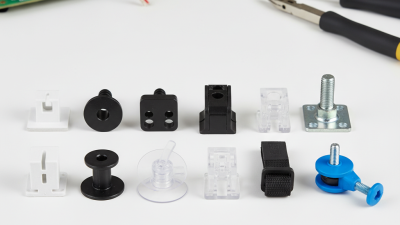
China’s cable tie mount manufacturers serve a market shaped by growing demand for organized, dependable cable routing. MarketsandMarkets’ Cable Management Market report estimated the global market at USD 23.2 billion in 2023 and forecast USD 35.2 billion by 2028. That figure covers cable management broadly, not cable tie mounts alone. It still signals the scale of the sector surrounding these small but essential components.
A mount may be only a few centimeters wide. Yet its adhesive backing, fixing hole, material, and temperature tolerance can affect installation and long-term performance. On a factory panel, a weak bond may let a cable bundle sag. In a vehicle or equipment cabinet, fit and vibration resistance matter. Buyers should compare specifications, production consistency, customization options, and quality documentation—not price alone.
This guide examines ten China-based manufacturers through those practical criteria. It aims to help purchasing teams form a useful shortlist, while recognizing that supplier claims require independent checking. One limitation deserves candor: I could not verify a direct quotation from a named cable tie mount specialist, so I will not invent one or attribute a general observation to an expert. The comparison instead draws on published market research and manufacturer information. Real-world validation still matters. A sample test can reveal details that a catalog misses.

Cable tie mounts are small anchors that keep bundled wires fixed to a surface. A tie passes through the mount, then wraps around the cable bundle. Some mounts use adhesive backing; others have screw holes for a firmer hold. They help prevent wires from sagging, rubbing against sharp edges, or shifting during equipment service.
Small parts. Important job.
Mounts appear inside electrical cabinets, machinery, vehicles, data rooms, and building installations. For example, a technician may secure sensor cables along a cabinet wall, leaving space around terminals and moving components. Adhesive mounts suit clean, smooth surfaces and light-duty routing. Dust, heat, vibration, and oily surfaces can weaken adhesion, so a mechanical fastener may be more dependable in demanding locations. Check the surface and load before installation.
The wider market provides useful context, though it does not measure mounts alone. Grand View Research estimated the global cable management market at USD 23.53 billion in 2023 and projected a 6.5% compound annual growth rate from 2024 to 2030. This broader category includes products beyond tie mounts. That distinction matters. In practice, mount choice depends on bundle weight, environment, service access, and the surface material. A tidy route is not always a durable one.
A cable tie mount looks simple, but its base controls how force reaches a panel. Designers set the saddle width, slot geometry, and corner radii around cable size and bundle weight. Screw-mounted parts need a stable boss; adhesive-backed parts need a flat, clean footprint. Small radii can concentrate stress. That detail matters.
Injection molding suits high-volume production. Engineers choose resin for stiffness, heat, moisture, and UV exposure. Nylon 66 offers toughness, but absorbs moisture and may change dimensions. Gate position, mold draft, and cooling also affect warpage. Plastics Europe’s Plastics – the Fast Facts 2024 reports 413.8 million tonnes of global plastics production in 2023. Efficient resin use and scrap control are practical design concerns.
Validation should reflect real service conditions. Pull tests can check tie-slot strength; peel tests can assess adhesive pads. Heat and humidity conditioning may reveal failures that a fresh sample hides. IEC 62275 provides relevant performance and testing references for cable ties, while mounts still need application-specific checks. A clean first-day bond proves little. Adhesive aging is easy to underestimate.
Cable tie mounts may be small, but their material determines how well they hold cables over time. Nylon is common because it is light, tough, and easy to mold. For equipment near windows or outdoor enclosures, UV-resistant grades can reduce brittleness from sunlight. Heat matters too: a mount that performs well in a cool office may soften near warm machinery. Small part, real consequences.
Adhesive-backed mounts depend on more than the plastic base. Foam tape must suit the surface, temperature range, and expected load. Dust, oil, or textured paint can weaken the bond, so installers should clean and dry the panel before fitting. Screw-mounted designs provide a mechanical hold, but the panel must accept drilling and the screw must not damage nearby components. There is no universal best choice.
Quality checks should examine dimensions, flatness, hole alignment, and whether tie slots have rough edges that could abrade cable jackets. Pull testing can reveal weak joints, while heat and humidity exposure may expose failures that a quick visual inspection misses. Ask suppliers for material data and test samples in the actual installation conditions. A neat sample is not proof of long-term performance. Even careful testing has limits, and that part deserves honest attention.
Moisture absorption can affect dimensional stability and mechanical performance. Nylon 6/6 typically absorbs more moisture than the other common polymers shown.
Indicative equilibrium moisture-absorption ranges (% by mass) for typical unfilled resin grades. Actual values vary with grade, test conditions, and conditioning; check the material specification for production decisions.
China’s Top 10 Cable Tie Mount Manufacturers represent different approaches to materials, tooling, and quality control. A useful comparison looks beyond catalog size. Buyers can review material options, dimensional tolerances, production capacity, and inspection methods. These details affect whether a mount stays secure on a panel or inside a warm equipment cabinet.
Mounts may be made from nylon or other polymers, with adhesive or screw-fixing options. Fit matters. Ask manufacturers for drawings, sample parts, and clear test information. For adhesive-backed mounts, surface cleanliness and temperature can affect bonding. A small square mount that works on a smooth metal panel may not hold well on a dusty or textured surface. Small details count.
Production scale alone does not show how consistently parts are made. Buyers can check whether suppliers document batch inspections and respond clearly to technical questions. A factory may quote a low price, yet packaging, delivery timing, or size variation can complicate purchasing. Comparing the top ten is therefore not perfectly simple; specifications may differ, and published information can be incomplete. Samples offer a practical way to check fit before placing a larger order.
When comparing China’s cable tie mount manufacturers, ask for the same evidence from each: material grade, dimensions, load-test method, and batch traceability. IEC 62275:2018 covers cable ties and their mounting devices, but a standards reference alone does not prove that a specific mount suits your application. Request test results for the actual product, including adhesive performance on your intended surface. Samples matter. Test them after heat, humidity, and vibration exposure, especially if mounts will carry bundled cables overhead.
Check whether the supplier’s quality system is independently certified, then verify the certificate and its scope. The ISO Survey of Certifications 2023 reports more than one million valid ISO 9001 certificates worldwide; certification is common, not a guarantee of consistent parts. Compare dimensional tolerances, inspection records, defect handling, minimum order quantities, and lead times. Ask for recent batch inspection data, not only a polished catalogue. I would also test a few mounts from separate production lots; it takes time, and may feel excessive, but it can reveal inconsistent adhesive coverage or warped bases. Compare landed cost only after these checks, including packaging, shipping, and replacement terms.
Use these ten supplier-comparison factors when evaluating manufacturers. The benchmarks below describe product and sourcing details to verify; they are not claims about any specific company or a verified ranking.
| Comparison Factor | What to Compare | Evidence to Request or Check |
|---|---|---|
| 1. Product range | Check whether the supplier offers adhesive-backed mounts, screw-mounted mounts, push-in mounts, and other relevant mounting styles. | Product catalog, dimensional drawings, and sample parts. Confirm the mount style suits the installation surface and application. |
| 2. Material options | Common options include nylon (PA), polypropylene (PP), and polyethylene (PE). Confirm the exact resin grade and any material-specific limitations. | Material datasheet and, where required, resin or compliance documentation. Do not assume all grades have the same strength, temperature range, or chemical resistance. |
| 3. Cable-tie compatibility | Compare the compatible tie-width range, slot dimensions, and the number of tie channels for each mount design. | Dimensioned drawings and physical samples. Test with the actual cable tie size and bundle configuration intended for production. |
| 4. Mounting dimensions | Review overall length and width, mount thickness, hole diameter and spacing, and adhesive-pad dimensions where applicable. | Current technical drawings with tolerances. Confirm that hole patterns and clearances match the equipment or panel design. |
| 5. Adhesive performance | For adhesive-backed products, check adhesive type, recommended surface, application method, and stated service conditions. | Adhesive technical data, surface-preparation instructions, and application-specific test results. Validate adhesion on the actual substrate before use. |
| 6. Environmental suitability | Compare the stated operating-temperature range and suitability for UV exposure, moisture, chemicals, or indoor and outdoor use. | Product-specific datasheets and relevant test reports. Confirm test conditions and distinguish them from general material properties. |
| 7. Quality control | Review how the supplier controls dimensions, appearance, material consistency, and lot-to-lot variation. | Quality-control process, inspection records or sample inspection reports, and details of how nonconforming products are handled. |
| 8. Samples and customization | Compare sample availability and the supplier’s ability to adjust dimensions, colors, materials, adhesive, or packaging. | Approved samples, written specifications, and confirmation of tooling requirements, sample charges, and production approval steps. |
| 9. Order terms and delivery | Compare minimum order quantity, production lead time, packaging options, shipping terms, and capacity for repeat orders. | A written quotation and order schedule that specify quantities, delivery terms, packaging, and how lead time is calculated. |
| 10. Compliance and traceability | Identify any required product, material, or management-system documentation for the destination market and application. | Request current, scope-relevant certificates or declarations and confirm their validity with the issuing body where appropriate. Check batch identification and traceability arrangements. |