For global furniture brands, importers, and upholstery workshops, choosing a reliable China Best Sofa Feet Supplier can shape both product quality and delivery confidence. Sofa Feet may look like small components, yet they carry daily weight, influence seat height, and affect how a sofa sits on different floors. A few millimeters can change the finished profile. Small details matter.
A capable supplier should offer more than a broad catalogue. Buyers can compare materials, load ratings, finishes, mounting plates, and sample consistency before placing larger orders. Clear drawings and measurements help prevent mismatches between the leg, frame, and fixing points. Ask how finishes are checked and how packaging protects metal or wooden feet from scratches during transit. These practical details are easier to verify than broad promises.
Experience with export orders can also help a supplier coordinate specifications, samples, production schedules, and shipping documents. Still, no supplier is the right fit for every project. A design-led collection may need custom shapes, while a high-volume range may place greater value on repeatability and lead time. Buyers should request relevant product details and inspect samples against their own standards. Fit comes first. Even a well-made foot can disappoint if its dimensions or finish do not match the sofa. This guide explores what global buyers can assess when comparing China-based suppliers, so purchasing decisions rest on evidence, not just catalogue images.
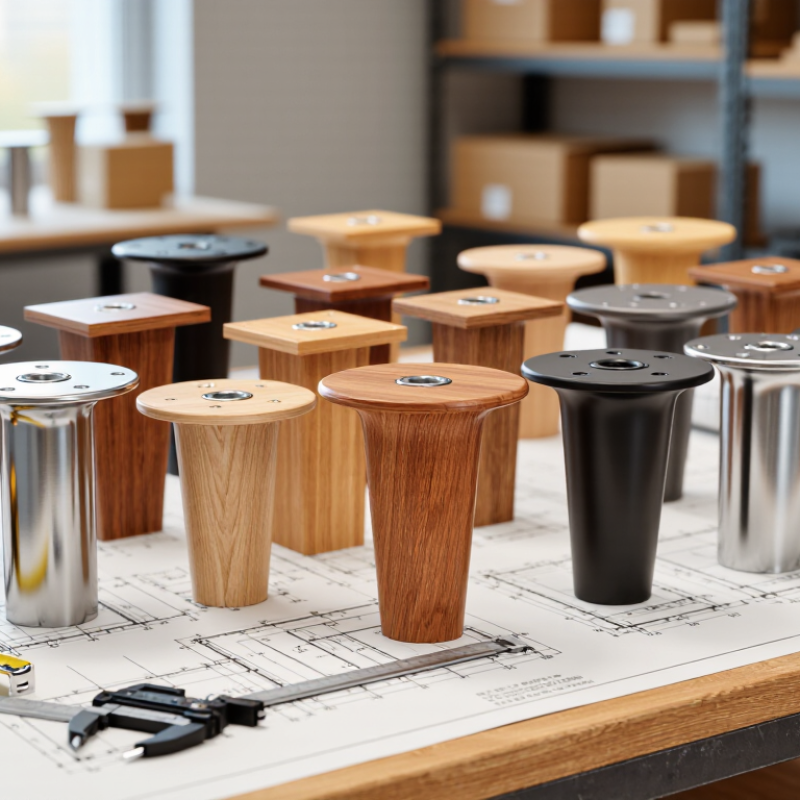
Sofa feet are the furniture’s contact points with the floor. They carry weight from the frame and distribute it across several small areas. A well-fitted set helps limit rocking, keeps the seat at a usable height, and reduces direct frame contact with flooring. Small parts. Big consequences.
Foot design depends on the sofa’s frame, expected load, and floor surface. A broad base can spread pressure on wood floors, while a securely fixed stem helps resist movement during daily use. Material alone is not enough; attachment quality matters, too.
Grand View Research valued the global furniture market at US$736.57 billion in 2023, reflecting the scale of demand for furniture and its components. Yet market size cannot prove that any individual foot is strong.
ANSI/BIFMA X5.4, a standard for lounge and public seating, includes stability and durability tests under repeated use. These tests assess seating as a whole, not every replacement foot separately. For buyers, checking dimensions, fixing method, load specifications, and floor-contact design is practical. A heavier foot may look reassuring, but it is not automatically stronger.
Sofa feet influence stability, floor protection, and the look of a finished piece. For global buyers comparing suppliers in China, material choice should match the sofa’s weight and intended use. Solid wood offers a warm, natural grain, but color and grain can vary between batches. Metal feet provide a clean, sturdy option and suit many contemporary designs. Plastic feet are lightweight and practical, though they may feel less substantial on larger sofas.
Shape affects both appearance and support. Tapered legs create a lighter profile, while straight, block-shaped feet give furniture a grounded look. Angled feet can add visual movement, but their mounting points need careful alignment. Finishes range from natural wood tones and painted colors to brushed or polished metal. A glossy surface can show fingerprints more readily. That trade-off is easy to overlook.
Tips: Request samples and check the finish in daylight. Confirm dimensions, mounting plates, and load guidance before ordering. Compare several pieces from one batch; small color differences may still appear. A sample helps, but it cannot show every production variation.
A comparison of representative material densities, shown in kilograms per cubic metre (kg/m³).
Steel, aluminum, hardwood, and polypropylene are used for sofa feet. The figures are approximate: density varies by material grade, wood species, and moisture content, and does not indicate load capacity. Common foot shapes include tapered, straight, angled, and turned designs; finishes include painted or powder-coated metal, polished metal, and stained or clear-coated wood.
China Best Sofa Feet Supplier for Global Buyers
China’s Sofa Feet Manufacturing and Supply Landscape
China’s sofa feet supply landscape includes metalworking, wood-turning, plastic-molding, and finishing workshops. Many produce standard legs with common mounting plates, while some adapt dimensions, finishes, and materials for larger orders. Buyers can work with one manufacturer or coordinate several suppliers. Each option affects communication, inspection, and delivery time. Details matter. A sample should fit the sofa frame and sit evenly on the floor. Check thread size, coating consistency, and stability before approving production.
Tips: Request a dimensioned drawing and pre-production sample. Confirm packaging, inspection points, and lead times in writing. Compare the quoted schedule with the sample process.
Supplier capabilities vary. Some workshops machine and finish parts in-house; others outsource processes such as coating. Outsourcing may reduce costs, but it can complicate color matching and quality tracking. Ask how load capacity is tested, what tolerances apply, and how defects are handled. A low quotation is not automatically a concern, but vague specifications can create costly misunderstandings. Even experienced buyers may need to revise details after testing a sample.
| Product or Supply Dimension | Common Options | Manufacturing or Specification Notes | Buyer Considerations |
|---|---|---|---|
| Metal sofa feet | Steel, stainless steel, aluminum, or zinc-alloy components | Depending on the design, production may involve cutting, stamping, casting, welding, machining, and surface finishing. | Confirm the material, load requirements, finish, corrosion expectations, and attachment method. |
| Wood sofa feet | Solid wood or engineered wood, with painted, stained, or clear finishes | Typical operations include cutting, turning or shaping, sanding, finishing, and fitting attachment hardware. | Specify wood species or material grade, color, finish, dimensions, and moisture-related requirements. |
| Plastic and composite feet | Molded polymer components, sometimes combined with metal inserts | Injection molding is commonly used for shaped plastic components; tooling and material selection affect design and production. | Check resin specification, insert type, appearance, intended load, and compatibility with the sofa frame. |
| Attachment systems | Threaded studs, mounting plates, screws, or other furniture-specific fittings | The attachment must match the frame construction and the dimensions of the existing or planned hardware. | Provide drawings or samples and confirm thread, plate size, hole spacing, and installation direction before production. |
| Height and geometry | Straight, tapered, angled, curved, or decorative profiles in project-specific heights | Dimensions and tolerances depend on the product drawing, tooling, material, and assembly design. | State finished height, footprint, angle, tolerance, and whether dimensions include the fitting. |
| Surface finish | Examples include powder coating, plating, polishing, brushing, painting, and wood staining | Available finishes depend on the base material and manufacturing process; color and gloss should be defined by a reference or specification. | Approve a sample and document color, texture, gloss, and inspection criteria before a larger order. |
| Customization and tooling | Custom profiles, dimensions, finishes, fittings, and packaging | Custom molded, cast, or stamped parts may require dedicated tooling; feasibility depends on design and order requirements. | Request a drawing review, sample approval, tooling terms, and confirmation of who owns and maintains custom tooling. |
| Quality checks | Dimensional inspection, appearance checks, fitting verification, and project-defined performance tests | Inspection plans should be based on the product drawing, material, intended use, and buyer requirements. | Agree on acceptance criteria, sampling approach, defect definitions, and required inspection records. |
| Packaging and export preparation | Individual protection, grouped cartons, labeling, and export-ready packing as specified | Packaging should protect finishes and fittings during handling and transport; requirements vary by destination and shipment. | Confirm carton details, product labels, packing list information, destination requirements, and shipping terms. |
Note: Options and specifications vary by design and supplier. Treat this table as a sourcing checklist and confirm final materials, dimensions, performance requirements, and compliance documentation for each order.
Evaluating a Chinese sofa-feet supplier starts with a precise product brief, not a catalog photo. State the material, finish, height, mounting type, and acceptable dimensional variation. Even a small mismatch can leave a sofa uneven or complicate assembly. Ask for technical drawings, then confirm thread size, plate thickness, and the stated load rating in writing. Small details matter.
Request samples from the same specification intended for production. Check that the feet sit level, the mounting points align, and the finish looks consistent under bright light. Ask how load tests are performed and whether test reports identify the method and sample. A supplier’s rating is useful, but it is not independent proof. Compare samples with inspection records from actual production batches.
Review material specifications, coating checks, quality procedures, packaging, and lead-time assumptions. If possible, arrange a factory assessment or use a qualified local inspection service before shipment. Keep records. No checklist removes every risk; a sample may not reflect a busy production run. I would also watch how clearly a supplier handles a difficult question. Slow or vague replies are not automatic deal-breakers, but they deserve follow-up. After all, a polished quotation cannot show whether cartons will protect the finish in transit.
International sourcing of sofa feet starts with a clear product brief, not a price request. Specify overall height, mounting plate dimensions, screw pattern, material, finish, and target load. Include a photo of the sofa base and a dimensioned sketch. Small mismatches matter: a 12-millimeter plate can miss a frame insert. Confirm whether the feet are visible or hidden, since finish consistency and edge quality matter differently. Drawings alone fall short.
Request samples from shortlisted suppliers and check them against the brief. Fit each foot to a real frame or matching test block; inspect wobble, sharp edges, coating coverage, and screw engagement. Ask how load tests are performed and request dated results tied to the same material and design. A polished sample can still hide batch variation. I would not approve production from photos alone. That shortcut is tempting.
Before ordering, agree on tolerances, color reference, carton quantity, protective packing, lead time, and defect-handling steps in writing. Confirm export documents, shipping terms, and destination-specific labeling with the supplier and freight partner; requirements can vary by market. Check whether replacement parts can be supplied for later orders. Compare total landed cost, not unit price alone, and clarify who pays for sample tooling or rework. Keep a retained sample from the approved batch. It is a simple safeguard, though often overlooked.