


2026 Top Releasable Cable Ties for Global Buyers
Releasable cable ties are small components with a demanding job: secure a bundle firmly, then release cleanly when layouts change. In a control cabinet, that may mean reopening a tie during maintenance without cutting it or damaging nearby wires. For global buyers, the right choice also depends on material, temperature range, bundle diameter, locking design, and consistent production quality.
Market reports offer useful context, but they rarely isolate releasable cable ties as a separate category. Grand View Research’s cable ties market analysis tracks broader demand across industries, while procurement decisions still require product-level evidence. Buyers should check technical datasheets, test conditions, and traceable quality documentation rather than rely on broad market estimates alone. A report can frame the opportunity. It cannot confirm a tie’s release force.
Small details matter. A stiff release tab can slow gloved hands; a fragile one can fail after repeated use. Yet there is a limit to what a product description can prove. This guide compares leading options by practical performance and sourcing considerations, while noting where specifications need independent verification. No single tie fits every application. We could not verify a named releasable-cable-tie expert’s published quotation from the supplied material, so we will not invent one.
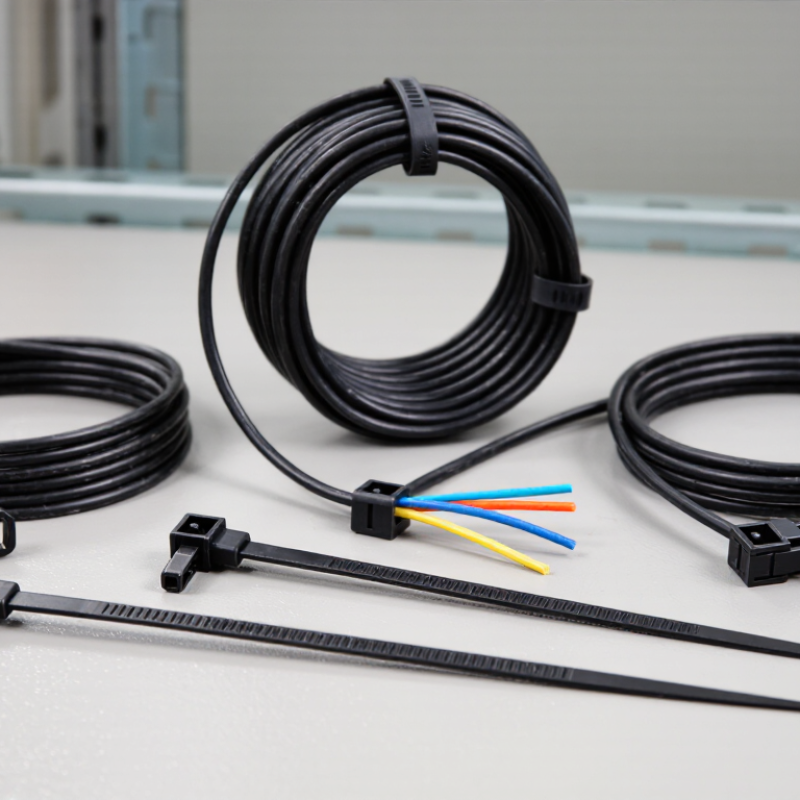
What Releasable Cable Ties Are and How They Work
Releasable cable ties use a molded ratchet head, a flexible strap, and a release lever. The strap locks when its teeth pass the internal pawl. Pressing the lever lifts the pawl, allowing removal without cutting the tie. This simple action helps technicians adjust control panels, server cabinets, and temporary wiring during maintenance.
Material selection matters. Standard nylon 6/6 suits many indoor installations, while UV-stabilized grades perform better near windows or outdoor equipment. The tie must match bundle diameter, tensile load, temperature, and moisture exposure. IEC 62275:2018 and UL 62275 provide testing guidance for cable management systems. However, compliance with a standard does not guarantee suitability for every site. Real installation conditions still require review. Grand View Research reported that the global cable management market was valued at about USD 24.95 billion in 2023, with continued growth expected through 2030. This wider market includes cable ties and related products, so the figure is not a direct releasable-tie forecast.
Tips: Check the release tab with gloved hands before installation. A small tab can be difficult to operate inside a crowded cabinet. Avoid overtightening, which may damage insulation or weaken the strap. Do not assume “reusable” means unlimited cycles; repeated release can wear the pawl. In practice, clear labeling and a spare tie often prevent avoidable delays. Temperature cycling deserves attention too. A tie that feels firm today may become brittle after long exposure.
2026 Top Releasable Cable Ties for Global Buyers – What Releasable Cable Ties Are and How They Work
Releasable cable ties are adjustable fasteners with a latch that can be disengaged, allowing the tie to be loosened and reused. The table compares common styles and indicative specifications. Actual dimensions, tensile ratings, temperature limits, and colors vary by product; confirm the manufacturer’s datasheet before purchase.
| Tie style | Typical material | Common size range | Indicative loop tensile rating | Release method | Typical applications |
|---|---|---|---|---|---|
| Miniature releasable | Nylon 6/6 | About 100–150 mm long; 2.5–3.6 mm wide | Often about 8–18 lbf (36–80 N) | Press or lift the molded release tab | Light wire bundles, desk cables, small temporary installations |
| General-purpose releasable | Nylon 6/6 | About 150–300 mm long; 3.6–4.8 mm wide | Often about 18–50 lbf (80–222 N) | Depress the release lever and draw the strap back | Office, workshop, and service wiring where bundles may change |
| Heavy-duty releasable | Nylon 6/6 or a specified engineering polymer | About 250–400 mm long; 7.0–9.0 mm wide | Often about 50–120 lbf (222–534 N) | Operate a larger, reinforced release feature | Larger cable bundles and maintenance work; check load requirements carefully |
| UV-resistant releasable | UV-stabilized nylon, commonly black | Commonly available in miniature through heavy-duty sizes | Depends on size and construction | Molded release tab or lever | Outdoor or sun-exposed installations; verify the product’s UV rating |
| Heat-stabilized releasable | Heat-stabilized nylon, typically nylon 6/6 | Available in selected lengths and widths | Depends on size and material grade | Molded release tab or lever | Warm environments within the specific product’s rated temperature range |
How Releasable Cable Ties Work
The strap is threaded through the head, where a pawl engages the strap’s teeth to hold the loop tight. To release it, press or lift the designated tab to move the pawl clear of the teeth, then pull the strap back. Reuse is intended for adjustment and maintenance, but the number of safe reuse cycles is not universal. Inspect the tie for damage and do not reuse it if the latch, strap, or teeth are worn or cracked.
Buyer note: Tensile figures are indicative examples, not a substitute for a product rating. Compare the specified minimum loop tensile strength, bundle diameter, operating temperature, UV exposure, flammability requirements, and applicable certifications for the intended use. Nylon ties can absorb moisture, which may affect handling and mechanical properties.
Related Posts
-
China Top 10 Reusable Zip Ties Suppliers for Global Buyers
-
What Are the Benefits of Using Bulk Cable Ties?
-
Top 10 Large Cable Ties You Need for Your Projects?
-
China Top Bulk Cable Ties Supplier for Global Buyers
-
What Are the Benefits of Using Long Cable Ties?
-
Why Releasable Cable Ties Are a Game Changer for Your Organization
