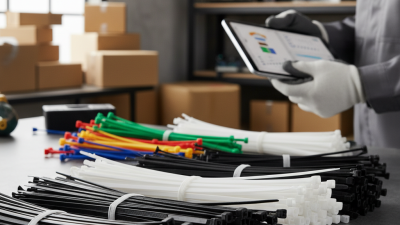
Industrial zip ties are fastening devices designed to bundle, secure, and route cables or components in demanding work settings. Their familiar ratcheting head and toothed strap make installation quick, but choosing one involves more than pulling it tight. Width, length, material, tensile rating, temperature range, and resistance to ultraviolet light or chemicals all affect performance. Small details matter. A brittle tie can crack beside a warm motor; an undersized tie can loosen around a vibrating cable bundle.
The broader cable-management market shows why these products remain relevant, though it is not a direct measure of zip-tie sales. Grand View Research’s Global Cable Management Market report estimated the market at about $23.7 billion in 2023 and projected continued growth through 2030. That figure includes products beyond industrial zip ties, so it should be read as industry context, not tie-specific demand. For electrical installations, IEC 62275:2018 covers cable ties and sets requirements for relevant performance testing. Buyers should still check each manufacturer’s datasheet: ratings and suitable applications can differ between products. A high tensile rating alone does not guarantee a good choice. In practice, installation tension, edge protection, and exposure conditions can matter just as much. And yes, a tie can be “industrial” in name yet poorly suited to a particular site. This guide explains what industrial zip ties are, how common materials and ratings differ, and which practical checks help match a tie to its environment. It is a simple product, but not a detail-free decision.
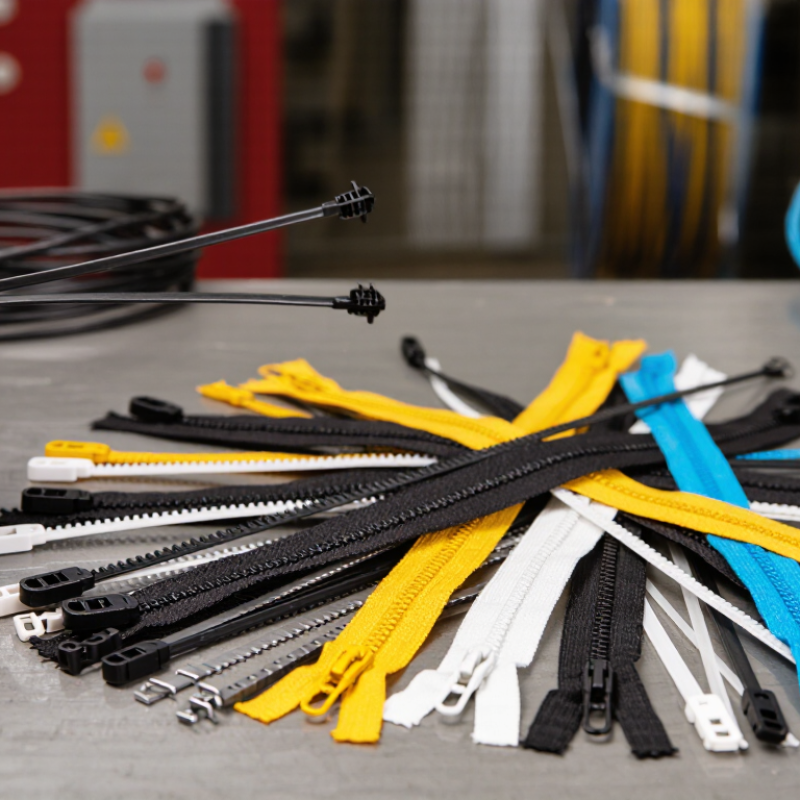
Industrial zip ties are heavy-duty fastening strips designed to bundle, secure, and organize cables, hoses, or lightweight components. Unlike ordinary household ties, they usually use thicker nylon, stronger locking heads, and more consistent dimensions. Their construction helps them withstand vibration, pulling force, moisture, and repeated temperature changes.
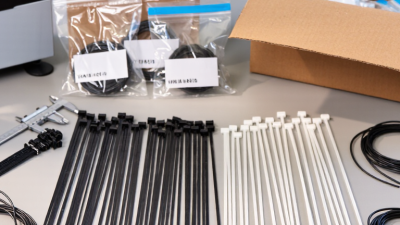
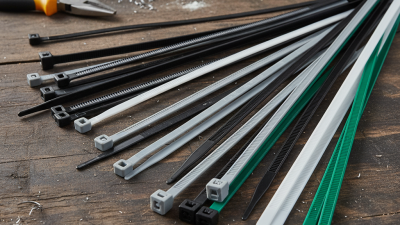
A typical industrial zip tie has three key features: a flexible strap, a toothed surface, and a self-locking head. The teeth engage inside the head and prevent the strap from sliding backward. Different widths and lengths support different load requirements.
Some versions resist ultraviolet exposure, oil, chemicals, or high temperatures. Material selection matters. Standard nylon may perform well indoors but become brittle outdoors without suitable stabilization.
Check the working temperature and tensile rating before installation. Do not judge strength by appearance alone. A wider tie is not automatically suitable for every application. Installers should avoid sharp edges, excessive tightening, and contact with hot surfaces. A smooth edge can prevent cuts in cable insulation.
Small details matter.
Leave enough room for expansion and inspection. Cut the excess strap cleanly, not at an angle that creates a sharp point. In practice, installation errors remain common. Over-tightening may damage delicate wires, while under-tightening allows movement and abrasion. Industrial zip ties are reliable, but they are not universal replacements for engineered clamps or load-bearing hardware.
What Are Industrial Zip Ties?
Industrial zip ties are fastening components designed for demanding work environments. Their materials and locking designs determine how safely they perform.
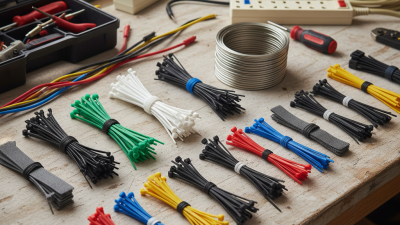
Most are made from nylon 6/6, which balances flexibility, strength, and resistance to abrasion. Outdoor versions may include ultraviolet stabilizers to reduce brittleness under sunlight. High-temperature applications often require heat-resistant polymers instead. Stainless steel ties handle stronger heat, vibration, and chemical exposure. They also need careful handling because their edges can be sharp.
Design Matters
Design matters as much as material. A molded head contains a pawl that grips the strap’s teeth. Stronger heads usually provide more reliable locking under vibration. Wider straps distribute pressure across heavy cable bundles. Rounded edges help prevent cuts to insulation and workers’ gloves. Some designs use releasable locks, while permanent versions resist accidental opening.
Inspection and Proper Use
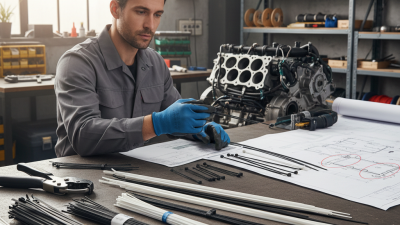
In field inspections, I check the tie’s material, width, temperature range, and stated tensile strength. I also inspect the locking head for cracks or incomplete engagement. A tight tie is not always a good tie. Excessive tension can deform insulation or damage delicate hoses. Leave enough room for thermal movement. No tie fits every application.
Common Oversights
One practical mistake is ignoring sunlight near windows or rooftops. Another is trusting appearance instead of specifications. Industrial fastening deserves that extra check.
Industrial zip ties differ mainly by material, locking design, and exposure rating. Standard nylon ties suit dry indoor wiring: their flexible bodies thread easily and lock with a small pawl inside the head. Releasable ties add a release tab, useful when technicians need to reopen a bundle during maintenance. They can be less convenient with gloves, though. Small details matter.
For sunlight, UV-stabilized nylon resists faster weathering than standard nylon; heat-stabilized grades are intended for warmer operating environments. Neither label alone guarantees a service life: check the specified temperature range and installation conditions. Stainless steel ties handle demanding heat or corrosive settings better, but they are less forgiving to fit and can have sharp edges. Match the tie to the environment, not just the bundle size. Allied Market Research’s cable-ties market report valued the global market at $1.8 billion in 2021 and projected $3.2 billion by 2031. That market forecast describes industry scale, not a performance comparison between tie types. For technical selection, compare tensile strength, loop diameter, material, and relevant test documentation; ratings can vary by product and test method. A small mismatch may loosen a bundle—or make later servicing awkward.
What Are Industrial Zip Ties?
Industrial Applications and Typical Uses
Industrial zip ties organize cables, hoses, and light components where vibration and clutter can complicate maintenance. In control cabinets, technicians use them to keep sensor and power wiring routed along rails, away from sharp edges and moving parts. On production lines, ties can secure low-voltage leads to frames or gather pneumatic tubing for easier inspection. They are handy, but not structural supports.
Material and installation matter. Nylon ties suit many indoor tasks; outdoor exposure, heat, chemicals, or repeated movement may require a different material or design. Choose a tie rated for the environment, leave cables uncrushed, and keep bundles clear of hot surfaces. A tie is not a clamp. I would also avoid treating a tight bundle as automatically neat: it can hide wear or make later repairs harder.
Market data gives context, not a usage count. Grand View Research’s Global Cable Ties Market report estimated the worldwide market at about US$1.2 billion in 2023, reflecting broad demand across sectors rather than industrial use alone. For maintenance teams, the useful measure is simpler: can a cable be traced, checked, and replaced without cutting away half the bundle? Good routing should make that answer yes.
| Industrial Application | Typical Use | Common Tie Type or Material | Selection Considerations |
|---|---|---|---|
| Electrical installation | Bundling and routing cables in control panels, machinery, and equipment. | Nylon 6/6 cable ties for general indoor use; UV-stabilized nylon for outdoor exposure. | Choose a suitable bundle diameter and tensile rating. Avoid overtightening, which can damage cable insulation. |
| Telecommunications and data networks | Organizing communication cables along racks, trays, and equipment runs. | Nylon ties or releasable ties where bundles may need to be changed. | Use a secure but non-crushing fit; hook-and-loop fasteners may be preferable for sensitive or frequently reconfigured cables. |
| Automotive and machinery | Securing wiring looms, hoses, and lightweight components during assembly or maintenance. | Heat-stabilized nylon for warmer locations; stainless steel ties for demanding high-temperature or severe-duty conditions. | Check operating temperature, vibration, abrasion, chemicals, and proximity to moving or hot parts. |
| HVAC and building services | Grouping control wiring, sensor leads, and light-duty tubing or lines. | Standard nylon ties indoors; UV-resistant ties for exposed exterior installations. | Confirm that the tie material suits the environment and that the bundle remains accessible for inspection. |
| Construction and site work | Temporary organization of cables, mesh, netting, and lightweight materials. | General-purpose nylon ties; releasable ties for reusable temporary arrangements. | For permanent structural attachment or lifting, use hardware designed and rated for that purpose—not cable ties. |
| Outdoor equipment and infrastructure | Fastening cable runs, signage, or lightweight fixtures to supports. | UV-stabilized nylon for sunlight exposure; stainless steel ties for selected harsh-duty applications. | Consider ultraviolet exposure, moisture, temperature cycling, corrosion risk, and the required service life. |
| Manufacturing and maintenance | Identifying, organizing, or temporarily securing parts and cable bundles during production or repair. | Standard, releasable, or label-bearing ties, depending on whether adjustment or identification is needed. | Match the tie style to the task; replace damaged or aged ties rather than relying on them for critical restraint. |
| Marine and corrosive environments | Securing wiring or lightweight components where salt spray or corrosive conditions may be present. | Appropriately specified stainless steel ties or corrosion-resistant polymer ties. | Material grade and compatibility matter; verify corrosion resistance for the specific exposure and application. |
Note: Industrial zip ties are fastening devices used primarily for bundling and securing. Always check the manufacturer’s published ratings and environmental limits for the specific tie, and do not use cable ties as a substitute for safety-critical restraints or approved electrical strain relief.
Industrial zip ties are heavy-duty fasteners used to bundle cables, hoses, and other components in demanding settings. Their strength depends on more than appearance. Material, width, locking design, and working conditions all matter when choosing one.
Start with the bundle size and the tie’s rated tensile strength. Leave room for a secure fit, but avoid pulling so tightly that the tie deforms a cable jacket or hose. Nylon ties suit many general-purpose applications, while outdoor sunlight, chemicals, heat, or cold may call for a different material. Check the product’s temperature and chemical-resistance specifications against the actual environment. A wider tie can spread pressure over a larger area, though it may not fit narrow spaces. Consider whether you need a permanent lock or a releasable design. A detail worth checking twice: the stated strength does not guarantee suitability for every load or installation. Test a sample when the consequences of failure are significant.
Tips: Measure the bundle at its widest point. Check clearance around sharp edges, and use edge protection where needed. Follow the manufacturer’s installation guidance. It is easy to overlook temperature changes.