Industrial work rarely gives cable ties an easy environment. Dust enters junction boxes. Oil coats gloves. Sunlight weakens exposed nylon. Under these conditions, choosing long zip ties by length alone can create expensive failures.
This guide examines the 2026 best long zip ties for industrial use, focusing on tensile strength, material quality, locking-head design, temperature resistance, and installation consistency. Experienced maintenance teams usually check whether a tie can wrap around oversized conduits without excessive bending. They also inspect the strap teeth, because smooth-looking plastic can still hide weak engagement. Small details matter.
Quality expert W. Edwards Deming said, “Quality comes not from inspection, but from the improvement of the production process.” His principle applies directly here. Reliable long zip ties should support a repeatable installation process, not merely pass a showroom inspection. Nylon 6/6 remains common, while UV-stabilized and heat-resistant grades suit harsher locations. Stainless steel versions may perform better near heat, chemicals, or heavy vibration, but they can cost more and require careful handling.
Nothing is perfect.
A longer strap does not automatically mean higher load capacity. A strong tie can still fail when pulled across a sharp edge or overtightened with unsuitable tools. This overview compares practical strengths and weaknesses, including real installation concerns that product pages often overlook. Expect clear selection guidance, but not exaggerated promises. The best choice depends on the bundle diameter, exposure conditions, service life, and the installer’s technique.
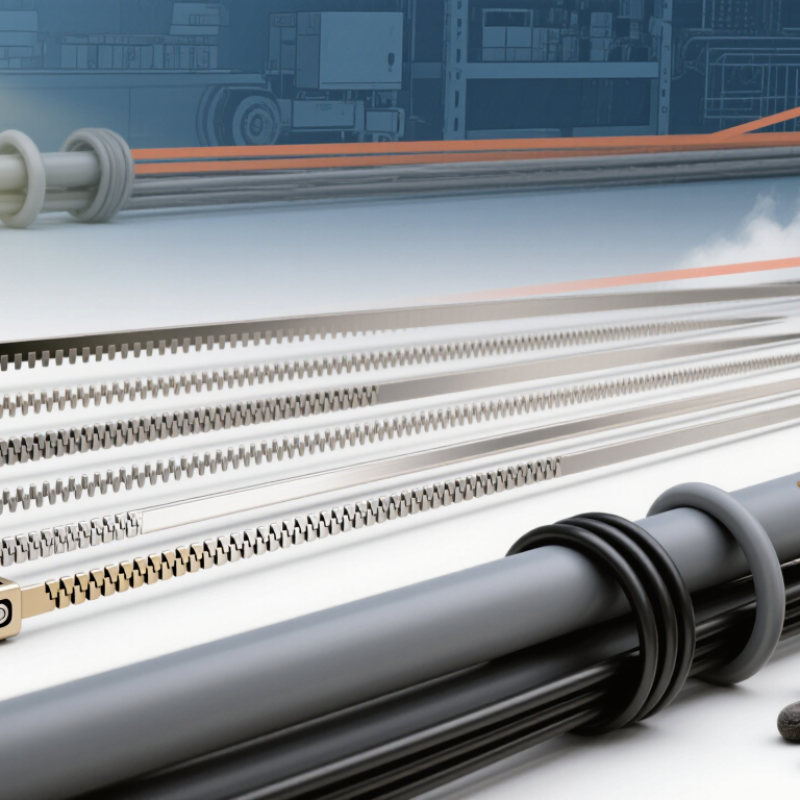
Long zip ties are not one universal product. Standard nylon 6/6 ties suit indoor cable bundles, control panels, and light mechanical routing. UV-stabilized nylon performs better on outdoor solar frames and exposed equipment. Stainless-steel ties handle heat, vibration, chemicals, and sharp industrial edges. Releasable versions help maintenance teams adjust temporary wiring without cutting new ties.
Choose by environment, not length alone. A 600 mm tie may secure large HVAC ducts, conveyor cables, or automotive harnesses, but excessive slack can create snag points. IEC 62275 emphasizes secure cable-management systems, including proper material selection and mechanical performance. In practice, installers should check tensile strength, temperature range, flame behavior, and contact compatibility. I still see long ties pulled too tightly around fiber cables. That mistake can damage the cable.
Demand is expanding with industrial electrification and digital infrastructure. Grand View Research’s Cable Ties Market Size, Share & Trends Analysis Report estimated the global market at about US$2.04 billion in 2023, with continued growth through 2030. The U.S. Department of Energy’s 2024 data-center report estimated electricity use at 176 TWh in 2023, potentially reaching 325–580 TWh by 2028. Those facilities need long, low-smoke, well-labeled ties for dense power and data routes. Stainless steel may be excessive indoors. Nylon may fail outdoors. That judgment still requires site testing.
2026 Best Long Zip Ties for Industrial Use?
Long zip ties must handle more than size. In industrial settings, material choice controls strength, flexibility, and service life. Standard nylon 6/6 works well for dry indoor assembly. It offers good tensile strength and clean locking performance. However, ordinary nylon can weaken under intense sunlight, moisture, or repeated temperature changes.
For outdoor equipment, choose UV-stabilized nylon with a clearly stated tensile rating. Heavy-duty ties often exceed 120 pounds, but the rating depends on width, temperature, and installation quality. Stainless steel ties suit hot areas, sharp edges, and demanding chemical environments. They resist corrosion better than nylon, though they cost more and may require careful handling. Polypropylene can perform better around acids and moisture, but its strength may be lower. No material is perfect.
In field maintenance, I have seen oversized ties fail because installers pulled them over rough edges. That mistake is easy to overlook. Check the working temperature, chemical exposure, and bundle diameter before purchase. Leave no sharp tail near wiring or moving parts.
Tips
Use a tensioning tool for consistent pressure. Avoid reusing locked ties. Store nylon ties in sealed packaging, away from heat and sunlight. Test a small sample under real conditions when failure would be expensive. Ratings are useful, but actual performance can differ.
For industrial cable ties, length is not a guess. Measure the bundle diameter, then allow room for the locking head and hand access. A useful rule is choosing a tie 20–30% longer than the measured circumference. Grand View Research valued the global cable ties market at about USD 2.3 billion in 2023 and projected continued growth through 2030. That growth reflects wider use in electrical, automotive, and construction installations.
Width affects strength, but it does not tell the whole story. Compare the rated tensile strength with the bundle’s weight, vibration, and pulling force. A 4.8-millimeter tie may suit light cable groups, while heavier industrial bundles often require widths above 7.0 millimeters. Outdoor installations need ultraviolet-resistant material and stable performance across temperature changes. Check markings against IEC 62275 or UL 62275 requirements. The locking design also matters. A stainless-steel locking tooth usually resists vibration better than a basic plastic pawl.
Do not over-tighten.
Over-tightening can damage insulation or create a hidden failure point. I would also avoid selecting the longest available tie automatically. Excess tail material can snag equipment and complicate inspection. One weakness in many purchasing decisions is trusting width alone. Test a sample under realistic heat, vibration, and installation pressure before approving bulk quantities. Specification sheets help, but field conditions remain less predictable.
| Recommended Tie Size | Approx. Usable Bundle Diameter | Typical Width | Typical Tensile Strength | Recommended Material | Locking Design | Best Industrial Application | Selection Guidance |
|---|---|---|---|---|---|---|---|
| 24 in / 610 mm | Up to approximately 6 in / 150 mm | 4.8 mm to 7.6 mm | 50 to 120 lb / 22 to 54 kg | UV-stabilized nylon 6/6 for indoor and outdoor use | One-piece self-locking pawl | Medium cable groups, conduit, hose bundles, and panel wiring | Choose 4.8 mm for lighter bundles; select 7.6 mm when greater pull resistance is required. |
| 36 in / 915 mm | Up to approximately 9 in / 225 mm | 7.6 mm to 9.0 mm | 120 to 175 lb / 54 to 79 kg | UV-stabilized nylon 6/6 or heat-stabilized nylon 6/6 | Heavy-duty one-piece pawl; stainless-steel insert for demanding conditions | Large harnesses, manufacturing equipment, HVAC lines, and temporary field assemblies | A practical general-purpose long-tie size when the bundle diameter is large but extreme load capacity is not required. |
| 48 in / 1,220 mm | Up to approximately 12 in / 300 mm | 9.0 mm to 12.7 mm | 175 to 250 lb / 79 to 113 kg | UV-stabilized nylon 6/6; stainless-steel locking insert for outdoor exposure | Heavy-duty pawl or stainless-steel ball-lock | Large cable trays, industrial piping support, machinery frames, and construction services | Use the wider option when vibration, abrasion, or a heavy bundle could place additional load on the locking head. |
| 60 in / 1,525 mm | Up to approximately 15 in / 380 mm | 9.0 mm to 12.7 mm | 175 to 250 lb / 79 to 113 kg | UV-stabilized or heat-stabilized nylon 6/6 | Heavy-duty one-piece pawl or metal-insert locking head | Extra-large harnesses, agricultural equipment, utility installations, and equipment skids | Allow enough tail length for tool access; avoid pulling the tie around sharp edges without edge protection. |
| 72 in / 1,830 mm | Up to approximately 18 in / 455 mm | 12.7 mm | 250 lb / 113 kg or higher | UV-stabilized nylon 6/6 or stainless steel for severe exposure | Stainless-steel ball-lock or reinforced heavy-duty pawl | Very large cable bundles, outdoor infrastructure, heavy equipment, and marine-adjacent installations | Use when bundle circumference is the main challenge; select stainless steel where chemical, salt, or heat exposure exceeds nylon limits. |
| 80 in / 2,030 mm | Up to approximately 20 in / 510 mm | 12.7 mm | 250 lb / 113 kg or higher | UV-stabilized nylon 6/6 or stainless steel | Reinforced heavy-duty pawl or stainless-steel locking system | Oversized industrial bundles, utility poles, large ducts, and structural temporary fastening | Measure the complete circumference first; very long ties should be supported against sagging and should not replace rated mechanical supports. |
| Any length with 4.8 mm width | Depends on tie length; commonly used for light to medium bundles | 4.8 mm | Approximately 40 to 50 lb / 18 to 23 kg | Standard or UV-stabilized nylon 6/6 | Compact one-piece pawl | Electrical wiring, low-load hose routing, and indoor assembly work | Best where installation space is limited. Do not use for high-vibration or high-load bundles unless the rated strength is verified. |
| Any length with 7.6 mm width | Depends on tie length; commonly used for medium to large bundles | 7.6 mm | Approximately 120 lb / 54 kg | UV-stabilized or heat-stabilized nylon 6/6 | Heavy-duty one-piece pawl | Industrial cable management, hoses, conduit, and equipment wiring | A balanced choice between flexibility, head size, installation speed, and tensile strength. |
| Any length with 12.7 mm width | Depends on tie length; intended for very large bundles | 12.7 mm | Approximately 250 lb / 113 kg or higher | UV-stabilized nylon 6/6, heat-stabilized nylon, or stainless steel | Reinforced pawl or stainless-steel ball-lock | Heavy machinery, outdoor utility work, large cable trays, and high-load temporary fastening | Choose this width for maximum holding capacity, but confirm that the tie gun and locking head are compatible. |
Important: Dimensions and tensile-strength values are typical industry ranges rather than guaranteed product specifications. Actual performance depends on tie geometry, material grade, temperature, ultraviolet exposure, chemical contact, installation tension, and edge conditions. Select a length that exceeds the complete bundle circumference, and choose a locking design with a suitable safety margin for vibration and environmental exposure.
2026 Best Long Zip Ties for Industrial Use: Installation Methods and Safety Practices
Long zip ties help organize heavy cable bundles, conduit routes, and temporary equipment wiring. Select a length that closes without stretching near its locking head. Leave room for a gloved hand. The tie should support the bundle, not crush it. IEC 62275 covers cable management systems, including mechanical performance and environmental considerations. Check temperature, moisture, chemical exposure, and ultraviolet conditions before installation.
Isolate electrical energy before working near energized equipment, following OSHA 1910.333 procedures. Wear eye protection and cut-resistant gloves when trimming ties. Use a calibrated tensioning tool for repeated installations. Pull firmly, but avoid excessive force. A tight tie can damage insulation over time. Cut the tail flush with a proper tool. Sharp leftover edges are small, but painful hazards. Route ties away from moving parts, hot surfaces, and access panels. Never use them as lifting devices.
BLS reported about 2.6 million nonfatal workplace injuries and illnesses in private industry during 2023. Small installation shortcuts still contribute to preventable exposure. Inspect every lock after tightening. Replace cracked, brittle, or discolored ties. Record material type and installation date for critical routes. This practice supports traceability during maintenance. It is easy to overestimate a plastic tie’s strength. Load ratings also change with temperature and aging. Check the supplier’s test data, and question assumptions before approving the installation.
2026 Best Long Zip Ties for Industrial Use
For industrial maintenance, the best long zip ties are not always the thickest. They should match the cable bundle, working temperature, vibration, and exposure to oils or cleaning chemicals. During routine inspections, technicians should check for whitening, cracks, stretched teeth, and loose locking heads. A brittle tie can fail suddenly inside a crowded control cabinet.
Reusable ties help during temporary wiring changes and scheduled servicing. Their release tabs allow technicians to open the bundle without cutting it. This reduces waste and protects nearby cables from accidental blade damage. However, repeated opening can weaken the locking mechanism. Reusable designs also may not suit high-vibration areas or permanent overhead support. Always confirm the stated load rating and material compatibility before installation.
Tips: Leave a small service loop near connectors. Do not overtighten around delicate insulation. Use gloves when working in dusty trays. Replace any tie that shows heat damage, deformation, or a damaged locking head. I have found that visual checks often miss hidden stress beneath overlapping bundles. A second inspection helps. Replacement decisions should consider the tie’s age, movement, and environment, not appearance alone. Keep several lengths available, because cutting a long tie short is easy, but extending one later is impossible.