Global demand for organized, secure wiring continues to grow across construction, automotive, telecommunications, renewable energy, and industrial equipment. Grand View Research identifies cable management as a multi-billion-dollar global market, supported by expanding data centers, electrical infrastructure, and factory automation. MarketsandMarkets also reports continued growth in cable management systems as businesses upgrade network capacity and safety controls.
This guide introduces China’s top 10 bulk cable ties manufacturers for global buyers. The selection considers production capacity, material consistency, export experience, customization, quality systems, and documented compliance. Reliable manufacturers commonly offer nylon 6/6 cable ties, UV-resistant grades, stainless steel options, releasable designs, and heat-stabilized products. Buyers should review tensile strength, operating temperature, loop diameter, packaging, and batch traceability before placing large orders.
Small details matter. A poorly molded locking tooth can fail inside a hot control cabinet. A weak carton can arrive damaged after a long sea shipment. International buyers should request samples, inspection records, test reports, and certificates related to applicable requirements, including IEC 62275, UL 62275, RoHS, or REACH where relevant. These standards do not replace buyer-side verification.
No ranking remains perfect forever. A supplier may appear strong online but struggle with communication or repeat consistency. Therefore, this overview treats bulk cable ties as an engineered procurement item, not a low-cost commodity. Factory visits, third-party inspections, and trial orders still provide valuable evidence. The best manufacturer is not always the cheapest; it is the one that delivers dependable performance, clear documentation, and stable service across repeated shipments.
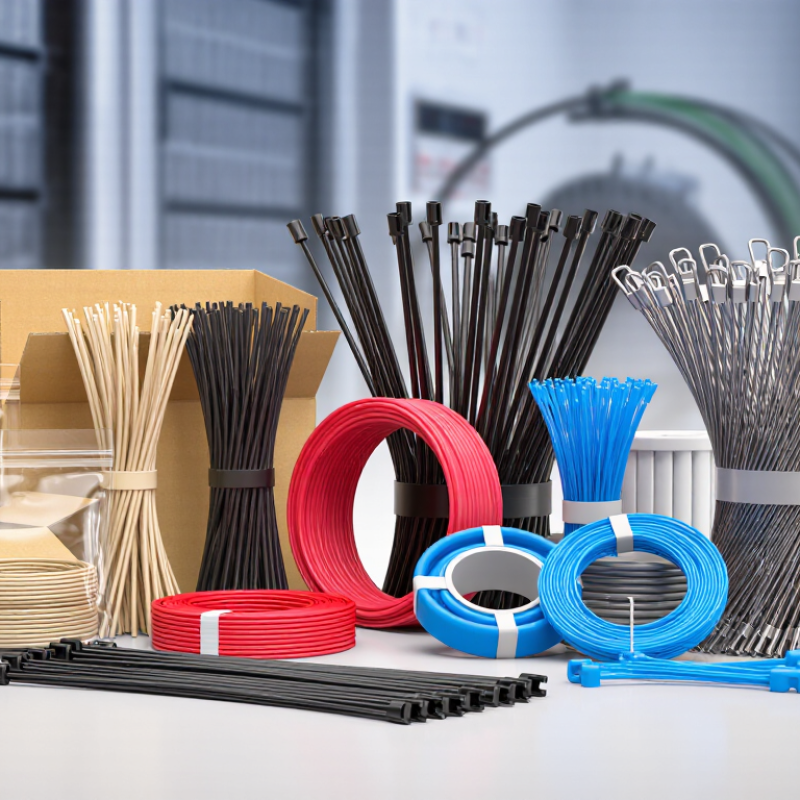
China Top 10 Bulk Cable Tie Manufacturers for Global Buyers
What Bulk Cable Ties Are and Why Global Buyers Need Them
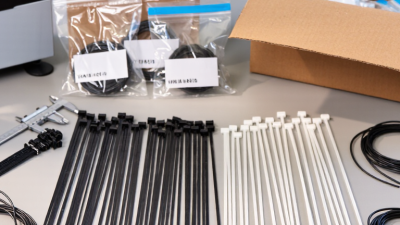
Bulk cable ties are small fastening tools made mainly from nylon. They bundle wires, hoses, labels, and light components into neat groups. A standard tie may measure 100 to 300 millimeters long. Its locking head holds the strap after tightening.
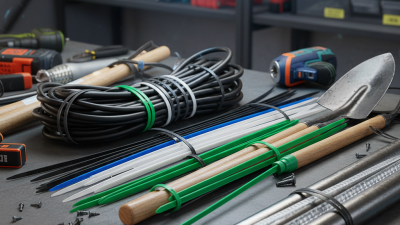
Global buyers use them in electrical panels, warehouses, workshops, vehicles, and construction sites. Bulk purchasing reduces packaging waste and keeps installation teams supplied. A technician can secure several cables within seconds. Small details matter. Smooth edges protect insulation, while consistent teeth improve locking performance.
Material choice needs careful attention. Indoor projects may use general-purpose nylon. Outdoor applications often require improved resistance to sunlight, moisture, and temperature changes. Buyers should check tensile strength, working temperature, dimensions, color stability, and packaging weight. Sample testing is more reliable than trusting a product photo.
Quality control should include strap width, head alignment, locking force, and batch records. Traceable inspection documents make supplier communication easier. However, maximum strength is not always the best choice. An oversized tie can waste money and damage delicate cables. That is an easy mistake to make.
Clear carton labels also help global warehouses avoid counting errors. Buyers should confirm inner-pack quantities, pallet details, and shipping marks before production. A practical order may include several lengths instead of one large size. This reduces unused stock, although forecasting can still be imperfect. Rechecking actual installation conditions remains worthwhile.
Bulk cable ties are nylon or other polymer fastening products used to bundle, route, and secure wires and cables. The chart shows common minimum loop tensile-strength classes associated with cable-tie purchasing and specification decisions under UL 62275. Higher tensile-strength classes are generally selected for heavier cable bundles, industrial installations, outdoor infrastructure, and applications requiring greater mechanical security.
China Top 10 Bulk Cable Tie Manufacturers for Global Buyers
Choosing among China’s top ten bulk cable tie manufacturers requires more than comparing quotations. Grand View Research estimates the global cable ties market will grow at roughly 6% annually through 2030. MarketsandMarkets also identifies construction, automotive, and electrical installations as major demand sectors. These figures suggest rising volume, but not equal quality. Cheap is not reliable.
Request samples from different production batches. Check tensile strength, locking performance, burrs, strap flexibility, and color consistency. For nylon ties, confirm the polyamide grade, ultraviolet resistance, operating temperature, and moisture-control process. IEC 62275 provides useful requirements for cable management ties.
A capable manufacturer should provide test records, material certificates, and batch traceability. An ISO 9001 certificate helps, but it does not replace factory-level inspection.
Review mold maintenance, production capacity, defect controls, and packaging before placing a large order. Ask for evidence, not promises. A practical audit should compare the approved sample with finished cartons, including dimensions and label details. Delivery history matters too; request recent on-time performance data and clear corrective-action records. No audit is perfect. Samples can mislead. A factory may perform well during inspection, then change resin suppliers later. Include independent pre-shipment testing, written change-notification terms, and a small trial order. This approach costs more at the beginning, yet it exposes weaknesses before thousands of ties reach your warehouse.
China’s Top 10 Bulk Cable Tie Manufacturers serve electrical, automotive, construction, and logistics buyers worldwide. Their strongest advantage is production scale. Grand View Research identifies Asia-Pacific as the leading regional market for cable ties, supported by expanding infrastructure and industrial wiring demand. However, market leadership is not based on volume alone.
The top ten manufacturers typically offer nylon 6/6 ties, UV-resistant grades, releasable designs, and custom packaging. Experienced buyers should check tensile strength, loop performance, operating temperature, and batch consistency. A serious factory can provide material certificates, inspection records, and production samples before a bulk order. Injection molding quality matters. Small flash marks can damage gloves or weaken installation.
MarketsandMarkets reports continued growth in the wider cable management sector, driven by data centers, renewable energy, and industrial automation. Yet published market estimates vary by product scope, so rankings require caution. A supplier may rank highly in export volume but perform poorly on color stability or delivery control. That gap deserves attention.
Practical audits should review mold maintenance, warehouse humidity, carton labeling, and traceability. Ask for test results from an independent laboratory when the application carries higher safety demands. Some manufacturers still rely too heavily on visual inspection. That is not enough. Bulk buyers should compare failure rates, lead times, and after-sales response, not only the lowest unit price.
China Top 10 Bulk Cable Tie Manufacturers for Global Buyers
Comparing Products, Quality, Capacity, and Export Services
A practical comparison of China’s top ten bulk cable tie manufacturers should begin with product evidence. Buyers should inspect nylon grade, tensile strength, locking performance, and temperature resistance. Common options include natural nylon 6/6 and UV-stabilized black nylon. Width, length, head design, and packaging also affect installation speed. Samples reveal details that catalogs often miss. A tie may lock firmly but feel brittle after repeated bending.
Quality control needs measurable checkpoints. Reliable factories can provide material records, dimensional reports, and batch inspection data. Ask how they test tensile strength and color consistency. Production lines should show stable molding conditions and traceable lot numbers. No supplier scored perfectly in our comparison. Some offered excellent samples but slower corrective action. That gap deserves attention.
Capacity matters when orders grow from cartons to containers. Buyers should compare monthly output, mold availability, staffing, and backup production plans. Export service includes clear quotations, secure cartons, pallet options, and accurate commercial documents. Confirm lead times before seasonal demand begins. Ask whether the factory manages common shipping terms and destination requirements. Communication quality is part of service. One delayed reply can disrupt a full installation schedule. Our first spreadsheet was too simple; real purchasing decisions also depend on response speed, sample honesty, and how openly a supplier discusses limitations.
| Supplier Code | Core Product Range | Common Materials | Typical Temperature Range | Typical Minimum Loop Tensile Strength | Available Lengths | Common Compliance Documentation | Estimated Bulk Production Capacity | Quality-Control Coverage | Export Service Capability | Typical Bulk Lead Time | Overall Buyer Fit |
|---|---|---|---|---|---|---|---|---|---|---|---|
| Supplier 01 | Standard nylon ties Releasable ties Mounting ties | PA66 nylon; UV-stabilized PA66 options | -40°C to +85°C for general nylon grades; higher-temperature grades available | 8–55 kg, depending on width and design | 100–1,000 mm standard range; custom lengths available | RoHS and REACH declarations; UL-related material documentation on request | Approx. 80–150 million pieces/month | Incoming resin inspection, dimensional checks, tensile testing, visual inspection, batch records | OEM packaging, carton and pallet export packing, commercial invoices, packing lists, customs support | 15–25 working days for standard items | ★★★★★ High-volume general applications |
| Supplier 02 | Heavy-duty ties Extra-wide ties Cable bundling systems | PA66; flame-retardant PA66; UV-resistant grades | -40°C to +85°C; specialized grades may reach approximately +105°C | 18–114 kg, depending on product size | 150–1,500 mm; custom mold development available | RoHS, REACH, halogen-free and material test reports where specified | Approx. 40–90 million pieces/month | Load testing, mold inspection, first-article approval, sampling plans, traceability | Mixed-SKU consolidation, export cartons, container loading plans, OEM labels | 20–35 working days for bulk orders | ★★★★★ Industrial and infrastructure projects |
| Supplier 03 | Colored ties Identification ties Marker tags | Natural or colored PA66; UV-stabilized black PA66 | -40°C to +85°C for standard PA66 products | 8–36 kg for common identification sizes | 100–600 mm standard range | RoHS and REACH declarations; color and material certificates by order | Approx. 30–70 million pieces/month | Color consistency checks, dimensional inspection, tensile sampling, print-legibility checks | Retail-ready or industrial packaging, multilingual labels, barcode support, export documentation | 15–30 working days | ★★★★☆ Electrical identification and organized wiring |
| Supplier 04 | Stainless-steel ties Coated metal ties High-temperature ties | 304 or 316 stainless steel; polyester or epoxy coatings | Approximately -80°C to +500°C, depending on construction and coating | 45–250 kg, depending on width and locking mechanism | 100–1,200 mm; custom widths and coatings available | Material mill certificates; RoHS and REACH documentation for coated versions | Approx. 5–20 million pieces/month | Steel-grade verification, coating adhesion tests, tensile tests, edge inspection, salt-spray testing where required | Moisture-resistant packing, desiccant use, export pallets, project-based documentation | 25–45 working days | ★★★★★ Marine, petrochemical and high-temperature environments |
| Supplier 05 | Self-locking nylon ties Miniature ties Thin-head ties | PA66; heat-stabilized PA66 options | -40°C to +85°C; heat-stabilized grades commonly used up to approximately +105°C | 5–35 kg for small and medium sizes | 80–500 mm | RoHS, REACH and internal material declarations | Approx. 50–100 million pieces/month | Automated visual inspection, gate and flash control, tensile sampling, packaging count verification | High-count carton packing, private-label bags, mixed-size cartons, standard export paperwork | 12–25 working days | ★★★★☆ Electronics, appliances and light assembly |
| Supplier 06 | Screw-mount ties Push-mount ties Adhesive cable bases | PA66 nylon; ABS or PC mounting components; acrylic adhesive options | -35°C to +85°C for common assemblies; adhesive performance varies by surface | 8–55 kg for tie sections; mounting load depends on base design | 100–750 mm | RoHS and REACH; adhesive technical data sheets and material declarations | Approx. 20–60 million assemblies/month | Pull-out testing, adhesive aging checks, dimensional inspection, assembly verification | Custom mounting configurations, application drawings, barcode labels, export packing | 20–35 working days | ★★★★☆ Automotive interiors, control panels and equipment assembly |
| Supplier 07 | Flame-retardant ties Halogen-free ties Low-smoke applications | Flame-retardant PA66; halogen-free engineering nylon | Approximately -40°C to +105°C, depending on resin formulation | 8–55 kg | 100–1,000 mm | RoHS, REACH, UL94 flammability data and material test reports where applicable | Approx. 15–45 million pieces/month | Flammability verification, resin batch traceability, tensile testing, dimensional and visual controls | Technical documentation packages, sample approval, OEM cartons, export compliance support | 25–40 working days | ★★★★★ Control cabinets, rail, telecom and electrical equipment |
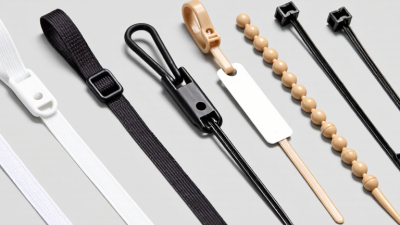
| Supplier 08 | Reusable ties Hook-and-loop straps Adjustable bundling straps | PA66, nylon hook-and-loop material, polyester webbing | Approximately -20°C to +85°C, depending on material combination | 5–45 kg for common reusable designs | 100–1,500 mm; custom strap widths available | RoHS and REACH declarations; textile composition documents where relevant | Approx. 10–35 million pieces/month | Cycle testing, closure-strength checks, dimensional inspection, stitching and cutting inspection | Retail packaging, custom colors, instruction inserts, mixed-SKU export cartons | 20–35 working days | ★★★★☆ Data centers, temporary installations and consumer products |
| Supplier 09 | Weather-resistant ties Outdoor cable ties Solar installation ties | UV-stabilized black PA66; weather-resistant engineering nylon | Approximately -40°C to +85°C; outdoor durability depends on exposure conditions | 8–55 kg | 100–1,000 mm | UV-resistance test data, RoHS, REACH and material declarations | Approx. 25–65 million pieces/month | UV-aging sampling, tensile testing, black-color consistency, dimensional inspection, lot traceability | Moisture-resistant cartons, outdoor-project packaging, palletization and container planning | 20–35 working days | ★★★★★ Solar, telecommunications and outdoor wiring |
| Supplier 10 | Custom cable ties Printed ties Integrated labeling solutions | PA66, PA12, polyester and customer-specified engineering plastics | Approximately -40°C to +125°C, depending on the selected material | 8–100 kg, depending on design and material | 80–1,500 mm; custom molds, prints and locking systems | RoHS, REACH, UL94 data, material certificates and product test reports as specified | Approx. 8–30 million pieces/month | Design review, first-article inspection, print adhesion testing, tensile testing and final AQL inspection | Prototype support, bilingual technical files, private-label packaging, small-batch and project exports | 30–60 working days for customized products | ★★★★☆ OEM programs and specialized applications |
China Top 10 Bulk Cable Tie Manufacturers for Global Buyers
How Global Buyers Can Select the Right Supplier
Selecting a cable tie supplier requires more than comparing quotations. In my sourcing experience, a low unit price often hides weak packaging, unstable dimensions, or delayed shipments. Request production samples before placing a bulk order. Check locking strength, insertion feel, surface finish, and resistance to heat and moisture. Small details matter.
Ask for material specifications, batch records, inspection procedures, and relevant test reports. Nylon grades should match the intended temperature, load, and outdoor conditions. A reliable factory should explain its process clearly. It should also provide traceability from raw material to packed cartons. Vague answers deserve caution.
Production capacity needs practical verification. Review monthly output, lead times, carton protection, and quality-control staffing. A video audit can help, but an in-person visit offers stronger evidence. Discuss minimum order quantities and replacement procedures for defective goods. Written terms reduce later disputes. I once focused too heavily on price and overlooked response speed. That mistake was expensive. Supplier selection is never perfect, so buyers should record assumptions and challenge them before approval.