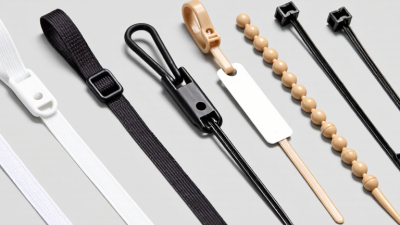
How to Choose the Right Long Zip Ties?
Choosing the right long zip ties is not simply a matter of buying the longest option available. The correct tie must reach around the bundle, close securely, and suit the conditions where it will be used. A tie that barely fits can be difficult to fasten. An oversized one may leave a loose tail or create unnecessary clutter.
Maurus C. Logan, credited with developing the Ty-Rap cable tie, is an important figure in fastening history. I could not verify a direct quotation from him about selecting long zip ties, so I will not invent one. The practical rule for this guide is: “Choose for the bundle, environment, and load—not length alone.” That is editorial wording, not a quote from Logan.
Measure the bundle at its widest point. Allow room for the tie to pass around it without forcing the locking head against a sharp edge. Then check the tie’s stated length, width, material, and rated tensile strength. For outdoor use, heat, moisture, and sunlight may affect material choice. In a workshop, a long tail can snag on gloves or nearby equipment. Small details matter.
A specification sheet helps, but it does not replace checking the actual installation. Cable bundles vary. So do working conditions. This guide will help compare long zip ties by fit, strength, material, and practical use, while noting where a simple measurement may still leave questions.
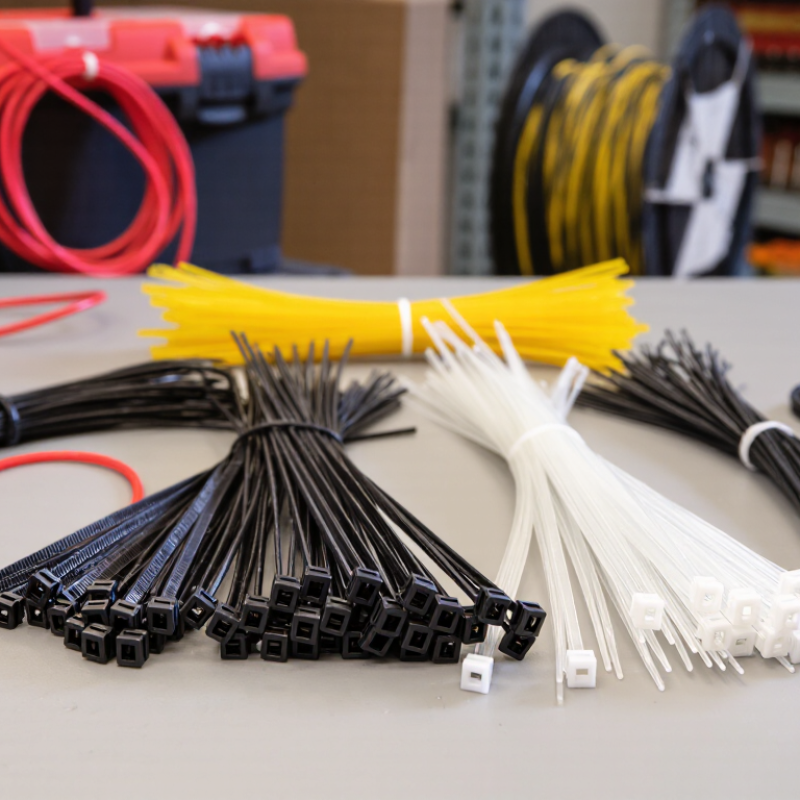
Identify the Application and Load Requirements
How to Choose the Right Long Zip Ties?
Identify the Application and Load Requirements
Start with what the tie must hold, where it will sit, and for how long. A long tie may reach around a thick duct or several cables, but extra length does not mean extra strength. Estimate the bundle’s weight, then account for movement, vibration, sharp edges, and temperature changes. Outdoor exposure matters too: sunlight can weaken some plastics over time. IEC 62275:2018 and UL 62275 describe controlled testing for cable-tie performance, including loop tensile strength. Treat a listed test value as a comparison point, not an automatic working-load limit. For example, a hypothetical 222 N (50 lbf) test rating does not guarantee safe support for a 50-pound hanging load.
Tips: Check the tested loop-tensile value and the manufacturer’s temperature and UV limits. Leave room for a smooth, snug fit; a tie pulled hard against a sharp metal edge may fail early. For overhead or safety-critical support, use a purpose-rated fastener rather than relying on ordinary ties. I still recheck the actual bundle after installation; paper estimates miss awkward bends.
Match the tie’s length to the bundle circumference, with enough tail for the locking head to engage fully. If the load shifts or pulses, allow for that dynamic stress instead of choosing by static weight alone. Do not assume two ties provide twice the capacity unless the assembly has been tested that way. A small trial fit can reveal a poor head position or an unexpectedly tight bend before the full installation.
Measure the Bundle to Select the Appropriate Tie Length
Measure the finished bundle, not the loose cables. Wrap a flexible tape around its widest point, including sleeves, connectors, and any branches the tie must hold. For a round bundle measuring 50 mm across, the loop path is about 157 mm: π × 50 mm. That is only the starting point. Add room for the tie head, locking engagement, and enough tail to pull securely. Check the tie’s usable length, since advertised overall length may include the head.
IEC 62275:2018 covers cable ties for electrical installations and evaluates mechanical performance, including loop tensile strength. That rating helps compare ties, but it does not tell you which length fits your bundle. Measure twice. I still recheck awkward shapes. A flat bundle, a tight bend, or a connector can change the needed path. As a practical check, loosely wrap a sample tie around the assembled bundle before ordering in quantity. Choose a length that closes without forcing the bundle or leaving a long, snag-prone tail. If the cables may shift or the bundle may grow, allow extra length—but confirm the tie remains within its specified load rating.
Choose a Material Suited to the Environment
For long zip ties, match the material to sunlight, moisture, temperature, and chemical exposure. Standard nylon 6/6 suits many indoor jobs, but it absorbs water. The CAMPUS engineering-plastics database reports typical PA66 water absorption near 2.5% at 23°C and 50% relative humidity; actual values vary by grade and conditioning. In damp locations, that moisture can change tie dimensions and mechanical performance. Allow for it when a bundle must hold a precise tension.
Sunlight needs a separate check. For outdoor runs, choose ties specifically rated as UV-stabilized; black color alone does not prove UV resistance. ASTM D4329 provides a fluorescent-UV exposure method for evaluating plastics, but laboratory exposure does not perfectly predict years on a wall or roof. Small detail. Check the maker’s test conditions and temperature range, then inspect a sample after exposure if failure would matter.
Salt spray, cleaners, oils, and heat can make nylon the wrong choice. Stainless-steel ties may suit harsher settings, but select a grade compatible with the actual chemicals and surrounding metals. A tie near a sunlit rooftop can face heat, UV, and movement at once. That combination is easy to overlook. When conditions are uncertain, test the longest tie under the real load; long spans magnify stretch and installation mistakes.
Compare Tie Width, Strength, and Locking Features
Long zip ties can look alike, but width changes how they handle a bundle. Width matters. Narrow ties fit between crowded cables and through small mounting slots. Wider ties spread pressure across hoses, branches, or bulky packages, reducing the chance of a sharp edge digging into the surface. Measure the bundle at its widest point, then leave room for the tie head to pass through.
Check the stated tensile strength, but do not treat it as a guaranteed working load. Ratings often come from controlled tests, while real installations face uneven tension, vibration, and changing temperatures. Read the product specification and allow a safety margin, especially when a tie will support anything overhead. A common mistake is choosing by length alone. A tie may reach around a bundle yet still be too weak or narrow for the job.
Look closely at the locking head. A smooth, well-aligned pawl should pull through without snagging, then resist backing out when lightly tugged. Test the fit. If the tail must be forced into the head, the tie may be poorly matched to the bundle. For outdoor use, check for UV resistance; for warm equipment areas, verify the temperature range. These details are easy to overlook, and I would still inspect the finished bundle for pinched wires or excessive pressure.
How to Choose the Right Long Zip Ties? - Compare Tie Width, Strength, and Locking Features
| Tie Width |
Common Long Lengths |
Typical Minimum Loop Tensile Strength |
Common Locking Feature |
Best Suited For |
| 2.5 mm (0.10 in) |
150–300 mm (6–12 in) |
About 18 lb (8 kg) |
Standard one-piece ratchet lock |
Light-duty wire bundling and small, lightweight items |
| 3.6 mm (0.14 in) |
200–450 mm (8–18 in) |
About 40 lb (18 kg) |
Standard one-piece ratchet lock |
General cable organization and light indoor fastening |
| 4.8 mm (0.19 in) |
250–760 mm (10–30 in) |
About 50 lb (22 kg) |
Standard one-piece ratchet lock |
Everyday bundling of cables, tubing, and moderate-size items |
| 7.6 mm (0.30 in) |
300–1,220 mm (12–48 in) |
About 120 lb (54 kg) |
Heavy-duty ratchet lock |
Larger bundles and applications needing greater holding strength |
| 9.0 mm (0.35 in) |
450–1,220 mm (18–48 in) |
About 175 lb (79 kg) |
Heavy-duty ratchet lock |
Large, heavier bundles where a wider tie is practical |
| 12.7 mm (0.50 in) |
600–1,520 mm (24–60 in) |
About 250 lb (113 kg) |
Extra-heavy-duty ratchet lock |
Very large bundles and demanding fastening applications |
Strength ratings and available lengths vary by tie design, material, and manufacturer. Treat the figures above as typical examples, not a substitute for the product specification. For repeated adjustment, consider a releasable-lock tie; for outdoor use, check that the material is UV-resistant. Do not use cable ties as lifting or personal-safety devices.
Check Compatibility and Installation Requirements
How to Choose the Right Long Zip Ties?
Check Compatibility and Installation Requirements
Long zip ties can secure wide bundles, but length is only one part of the choice. Measure the bundle around its widest point, including any protective sleeve or insulation. Leave room for the tie head, and check that the tail can pass through without snagging. Length alone misleads. Compare the tie’s rated strength with the load and consider temperature, moisture, and sunlight exposure. A tie used outdoors may need different material properties from one used indoors. It is tempting to choose the longest option, but extra tail can get in the way.
Tips: Test one tie on a sample bundle. Confirm it closes cleanly and stays secure without crushing cables or tubing.
Check the installation space before ordering. Your hand or tensioning tool needs room to reach the tie head, especially behind panels or inside crowded enclosures. Some long ties are harder to tighten evenly, and cutting the tail flush can be awkward in tight spots. Avoid pulling so hard that the bundle deforms; snug is not the same as secure. I might overlook access when measuring, so a quick trial fit can catch problems before installation.