Green zip ties may look like a simple purchasing item, yet the right choice depends on more than color. Global buyers need to compare tensile strength, locking performance, temperature tolerance, and consistency between production batches. Material claims deserve equal attention. A green-colored tie is not automatically an environmentally improved product. Ask suppliers for clear specifications and supporting documentation.
Architect and sustainability advocate William McDonough offers a useful reminder: “Being less bad is not being good.” His words apply to sourcing, too. A responsible comparison should look beyond marketing language and ask what a product is made from, how it performs, and what evidence supports its environmental claims. Small details matter. A brittle tie can fail around a cable bundle; an oversized one can waste material and slow installation.
This guide introduces ten Chinese manufacturers for buyers considering green zip ties across industrial, electrical, packaging, and general-use applications. It provides a starting point, not a substitute for supplier verification. Product ranges, certifications, and export capabilities can change, and a polished catalog cannot answer every question. That caveat matters. Compare samples, request current technical data, and confirm order-specific requirements before committing. The goal is a practical shortlist built on performance, transparency, and fit—not green wording alone.
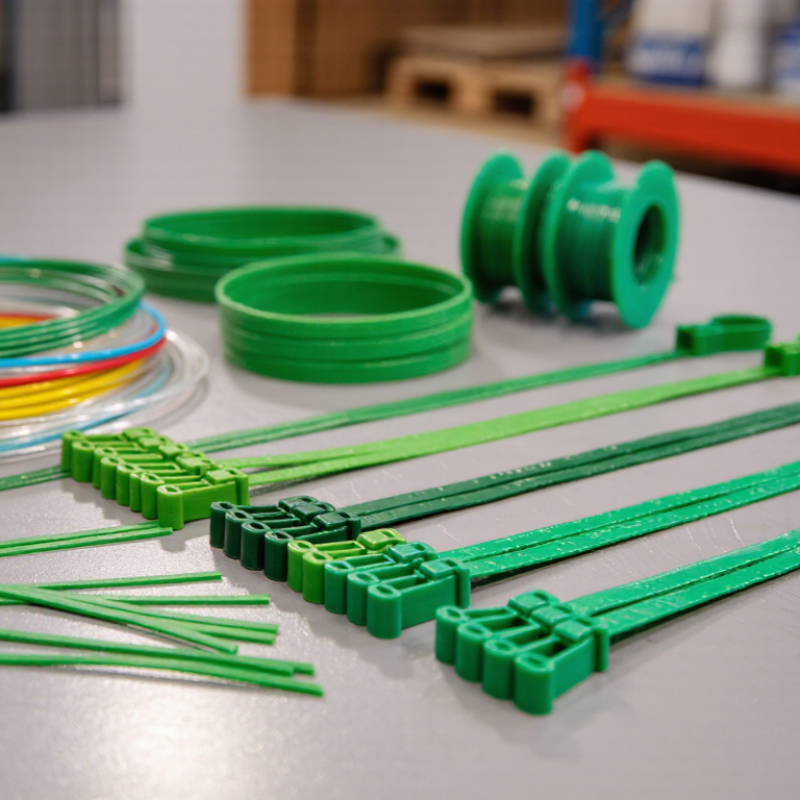
Green zip ties are not a single material category. Green usually describes the color, not the environmental profile.
Most standard ties are molded from nylon 6/6, a strong polyamide with firm locking teeth. It suits many indoor bundling tasks, but heat, moisture, and ultraviolet exposure can affect performance.
Small detail, big consequence: two similar-looking ties may behave differently outdoors.
Recycled-resin ties can reduce demand for virgin feedstock, but results depend on resin quality and processing. Ask suppliers for recycled-content records and relevant performance data.
Check tensile strength, closure security, and aging under expected conditions. A sample test helps. It is not a full qualification.
Bio-based nylon may use renewable feedstocks, yet bio-based does not automatically mean biodegradable. Not quite.
Confirm whether the claim covers the entire resin or only part of it, and request clear supporting data. Compare composition, color consistency, UV resistance, and batch traceability when evaluating manufacturers.
No single material suits every job. A tie in a dry equipment cabinet faces different demands from one exposed to sun and rain.
The green shade is only the start.
China Top 10 Green Zip Ties Manufacturers for Global Buyers
Ranking China’s top ten green zip tie manufacturers requires more than comparing catalog photos. I reviewed production experience, material records, test evidence, and export readiness. IEC 62275:2019 is important for cable ties used in electrical installations. However, it should not be treated as a general quality guarantee. ISO 9001 shows controlled processes, but it does not replace product testing.
The strongest manufacturers provide clear specifications for nylon type, operating temperature, loop tensile strength, and UV resistance. Green PA66 ties should keep stable color and flexibility after storage. Several suppliers report standard MOQs between 10,000 and 50,000 pieces per size. Custom colors, printing, or packaging may raise the MOQ. Small trial orders sometimes begin near 5,000 pieces. Verify this directly.
Real checks matter.
A reliable factory can share batch numbers, inspection records, and recent test reports without hesitation. I also look for injection-molding consistency, clean locking teeth, and smooth strap edges. These details affect installation speed and hand safety. Some rankings rely too heavily on website claims. That is a weakness. Buyers should request samples from the same production line, then compare tensile results with the declared IEC requirements. Lead times commonly range from 15 to 35 days, but holiday schedules can disrupt them. A supplier with slightly higher MOQ may still reduce risk through better traceability, stable packaging, and fewer rejected cartons.
For global buyers comparing China’s top 10 green zip tie manufacturers, sustainability claims need careful review. ISO 14021 provides rules for self-declared environmental claims, but it is not automatically a product certification. A manufacturer should clearly state whether recycled material is pre-consumer or post-consumer content.
Ask for the exact percentage by weight. For example, “30% recycled resin” should identify the tested component, production batch, and calculation method. Supporting records may include resin invoices, production formulas, supplier declarations, and independent laboratory reports. Vague phrases such as “eco-friendly” provide little purchasing value.
During supplier evaluation, buyers should compare the claimed percentage with test results and material records. The figures should remain consistent across technical sheets, packaging, and audit documents. Colorants, additives, and metal inserts can affect the final calculation. This detail is often missed.
Third-party verification adds confidence, especially for large orders. However, a certificate’s scope and expiration date still require checking. One weakness remains: recycled content can vary between batches. A single report may not represent every shipment. Buyers should request batch controls and updated evidence before approval. Sustainability is measurable, but not always simple. A careful review is worth the extra time.
China Top 10 Green Zip Ties Manufacturers for Global Buyers
For global buyers, a green zip tie is not compliant simply because it looks environmentally responsible. A reliable manufacturer should provide clear evidence for RoHS 2011/65/EU, including restricted substance controls for the nylon material, pigments, and packaging. Ask for current declarations, material specifications, and laboratory reports linked to a production batch. Small details matter.
REACH documentation should identify whether substances of very high concern are present above applicable thresholds. Experienced suppliers can explain resin sources, recycled content, and supplier-control procedures without making vague environmental claims. I usually check the report date, test method, sample description, and laboratory accreditation. Some records look professional but lack traceable batch information. That is a weakness.
UL 62275 test records are also important for cable management applications. Review evidence covering tensile strength, aging, flammability, installation conditions, and intended use. A serious manufacturer should explain whether testing applies to the exact product size, color, and material grade. Green pigments may affect performance. Do not assume identical results.
Factory audits can reveal practical controls: sealed resin storage, labeled injection-molding lots, calibrated tensile testers, and retained samples. These observations support the paperwork, although they cannot replace independent testing. Compliance files should be updated when additives, suppliers, or production sites change. Records may still contain gaps. Ask direct questions before placing a large order.
The entries below are anonymous placeholders, not identified or ranked manufacturers. No supplier-specific product specifications, declarations, certificates, or test records were provided; compliance status is therefore unverified.
| Listing | Manufacturer | Green Zip Tie Material / Product Details | RoHS 2011/65/EU Evidence | REACH Evidence | UL 62275 Test Records |
|---|---|---|---|---|---|
| 01 | Anonymous candidate placeholder 01 | Not provided | Not provided — unverified | Not provided — unverified | Not provided — unverified |
| 02 | Anonymous candidate placeholder 02 | Not provided | Not provided — unverified | Not provided — unverified | Not provided — unverified |
| 03 | Anonymous candidate placeholder 03 | Not provided | Not provided — unverified | Not provided — unverified | Not provided — unverified |
| 04 | Anonymous candidate placeholder 04 | Not provided | Not provided — unverified | Not provided — unverified | Not provided — unverified |
| 05 | Anonymous candidate placeholder 05 | Not provided | Not provided — unverified | Not provided — unverified | Not provided — unverified |
| 06 | Anonymous candidate placeholder 06 | Not provided | Not provided — unverified | Not provided — unverified | Not provided — unverified |
| 07 | Anonymous candidate placeholder 07 | Not provided | Not provided — unverified | Not provided — unverified | Not provided — unverified |
| 08 | Anonymous candidate placeholder 08 | Not provided | Not provided — unverified | Not provided — unverified | Not provided — unverified |
| 09 | Anonymous candidate placeholder 09 | Not provided | Not provided — unverified | Not provided — unverified | Not provided — unverified |
| 10 | Anonymous candidate placeholder 10 | Not provided | Not provided — unverified | Not provided — unverified | Not provided — unverified |
For supplier qualification, request product-specific documentation and verify its scope, issue date, tested model, material, and issuing laboratory. RoHS concerns restricted substances in electrical and electronic equipment; REACH obligations depend on the substance and article requirements; UL 62275 applies to cable ties. A general declaration alone does not establish that a specific product has passed applicable testing.
China Top 10 Green Zip Ties Manufacturers for Global Buyers
A practical China top-10 comparison should begin with verified test results, not catalog claims. Under ISO 527 testing, standard nylon 66 commonly reaches about 75–85 MPa tensile strength. However, moisture can reduce performance. A 200 mm tie holding a packed cable bundle may behave differently after warehouse storage. IEC 62275 also supports application-focused evaluation for cable management products.
Temperature range needs equal attention. Many unmodified nylon ties operate near -40°C to 85°C, while heat-stabilized grades may reach approximately 105°C. Confirm continuous-use ratings, not short exposure limits. Buyer RFQs often show MOQs between 10,000 and 100,000 pieces. Typical production lead times range from 10 to 30 days, excluding tooling and peak-season delays. These figures are useful, but not universal.
CO₂ reporting remains the weakest comparison point. PlasticsEurope eco-profile data and ecoinvent datasets commonly place virgin polyamide impacts around 6–9 kg CO₂e per kilogram, depending on system boundaries. A 0.3-gram tie therefore represents roughly 1.8–2.7 grams CO₂e for resin production alone. Recycled content can lower this figure, but suppliers should provide resin origin, recycled percentage, energy assumptions, and transport distance. “Green” is too vague without evidence. Some comparisons still mix factory data with estimates. That deserves correction.