Choosing the right nylon cable tie is less simple than grabbing the largest pack on a hardware shelf. Cable diameter, load, temperature, moisture, and installation method all affect performance. A tie used behind a dry office desk faces different demands from one securing wiring near machinery or outdoors.
This guide examines ten practical nylon cable tie types and explains where each one fits. Standard ties suit everyday bundling. Heavy-duty versions support thicker cable groups. Releasable ties help when technicians need repeated access. UV-resistant, heat-stabilized, push-mount, marker, beaded, and parallel-entry designs solve more specific installation problems.
Small details matter.
In field work, I have seen oversized ties create awkward loops, while short ties leave sharp, stressed ends. That experience supports a simple rule: match the tie to the environment, not just the bundle size. Check the stated tensile strength, operating temperature, material grade, and mounting compatibility before installation. A clean cut also matters, especially where hands may contact the finished bundle.
The ranking in this article considers usability, durability, installation speed, and maintenance value. It also recognizes that product labels are not always perfectly consistent between manufacturers. Nylon grades can vary, and real performance depends on storage, exposure, and installation quality. That limitation deserves attention.
Reliable selection is practical, not flashy. The best tie is the one that stays secure, protects the cable jacket, and remains serviceable when conditions change. Expect clear comparisons, realistic applications, and a few trade-offs that product descriptions often overlook.
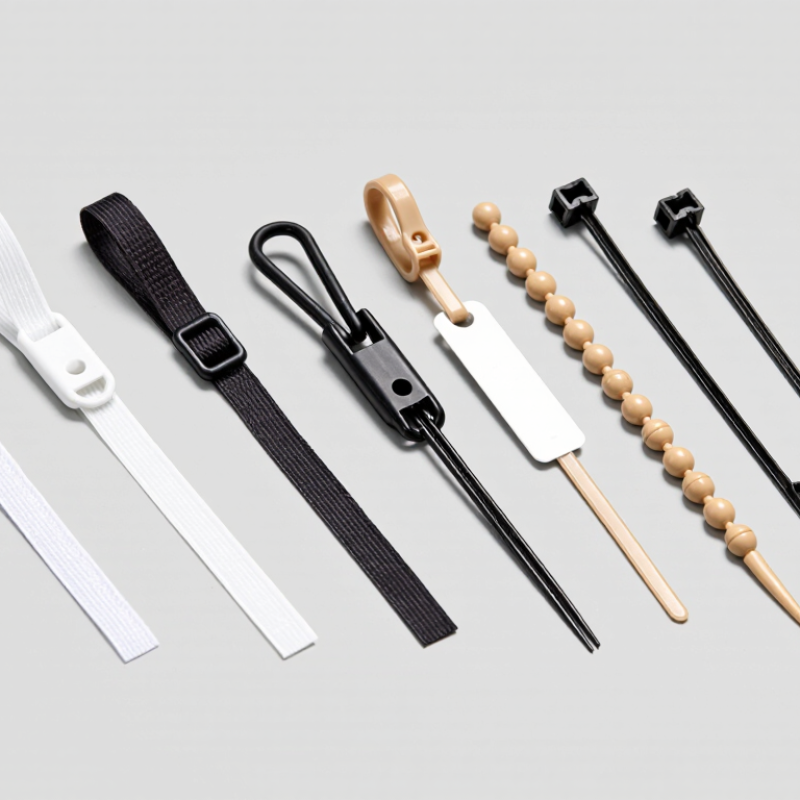
Nylon cable ties combine a flexible strap, locking head, and molded teeth. Most use nylon 6/6, classified under ASTM D4066. The material offers good insulation, light weight, and practical tensile strength. The ten common types are standard, miniature, heavy-duty, releasable, bead, ladder, push-mount, screw-mount, marker, and parallel-entry ties. Each design solves a different installation problem. A releasable head supports temporary wiring changes, while a push-mount body fixes cables through a drilled panel. Marker ties leave a visible identification surface. Details matter.
Global cable-tie market assessments published in 2024 forecast growth above 5% annually through 2030. This expansion reflects rising demand in electrical panels, vehicles, solar systems, and data infrastructure. However, volume does not equal suitability. A heavy-duty tie may crush soft insulation when tightened carelessly. A miniature tie may fail under vibration or sunlight. IEC 62275 and UL 62275 emphasize performance testing, including tensile strength, environmental resistance, and installation behavior.
Nylon also absorbs moisture, which can change flexibility and strength. UV-stabilized grades are more suitable for outdoor exposure, while heat-stabilized grades perform better near warm equipment. Flame-retardant formulations support specific fire-performance requirements, but they are not automatically suitable for every enclosure. The overlooked detail is installation tension. A clean bundle can still hide damage. In field inspections, sharp edges, excessive bending, and over-tightening remain frequent failure points. The better choice matches material, structure, temperature, load, and service environment.
What Are the Top 10 Nylon Cable Tie Types?
Standard nylon cable ties remain the practical choice for general-purpose bundling. They secure wires, hoses, and small components without special tools. Common sizes range from 100 to 300 millimeters, with tensile ratings selected by bundle weight and movement. Simple works.
Most standard ties use nylon 6/6, valued for strength, flexibility, and steady performance at room temperature. The Plastics Industry Association reports that nylon remains widely used in engineered applications because of its strength-to-weight ratio. Meanwhile, the 2024 MarketsandMarkets Cable Management System report identifies infrastructure expansion as a key demand driver for cable management products. These figures support continued use, but they do not replace product testing.
In field work, I check bundle diameter, edge contact, and installation tension before closing the tie. Over-tightening can deform insulation or create a hidden stress point. Details matter. For outdoor routing, standard indoor nylon may become brittle under ultraviolet exposure, so UV-stabilized material deserves consideration. UL 62275 and IEC 62275 provide useful reference points for cable tie performance and installation practices. However, ratings vary with temperature, moisture, and tie width. I have seen teams trust a printed tensile value too quickly. That assumption fails when cables vibrate or bend repeatedly. Use the supplier’s datasheet, inspect the locking head, and leave enough room for thermal movement.
This chart compares ten commonly available standard nylon 6/6 cable-tie sizes used for general-purpose bundling. The listed dimensions represent typical overall lengths and strap widths in millimeters; exact specifications can vary by application and manufacturer.
What Are the Top 10 Nylon Cable Tie Types?
Nylon cable ties remain practical for organizing wires, pipes, and heavier industrial bundles. Grand View Research estimates the global cable ties market will grow at about 6% annually through 2030. That growth reflects demand for stronger, more durable fastening solutions. For larger loads, the top ten types include standard, heavy-duty, extra-long, releasable, push-mount, screw-mount, marker, beaded, heat-stabilized, and UV-resistant ties. Heavy-duty ties usually have wider bodies and higher tensile ratings. Extra-long versions help secure thick cable groups without joining several short ties.
In field installations, I check the bundle diameter before selecting a tie. A 300-millimeter tie may look generous, yet insulation thickness can reduce usable length quickly. Load ratings are not universal. They vary with width, nylon grade, temperature, and locking-head design. UL 62275 and IEC 62275 provide recognized requirements for cable-management ties and their applications. A 2024 MarketsandMarkets assessment also identifies industrial, construction, and telecommunications use as key market segments. Still, a high rating does not excuse poor installation. Sharp edges, excessive pulling, and outdoor exposure can weaken nylon. That part is often overlooked.
Tips: Choose UV-resistant nylon for sunlight exposure. Use heat-stabilized nylon near warm equipment. Leave slight movement around cables. Do not overtighten delicate insulation. When the bundle feels unusually heavy, use extra-long heavy-duty ties, support mounts, or a reviewed fastening design.
| No. | Nylon Cable Tie Type | Typical Material | Common Length Range | Common Width Range | Typical Minimum Loop Tensile Strength | Typical Operating Temperature | Best Use |
|---|---|---|---|---|---|---|---|
| 1 | Standard Nylon 6/6 Cable Ties | Unmodified nylon 6/6 | 100–370 mm | 2.5–4.8 mm | 8–22 kgf | −40 to 85 °C | General-purpose bundling of wires, cables, hoses, and light components in dry indoor environments. |
| 2 | Heavy-Duty Nylon Cable Ties | High-strength nylon 6/6 | 200–760 mm | 7.0–13.0 mm | 55–115 kgf | −40 to 85 °C | Large cable bundles, industrial equipment, construction assemblies, and heavier non-safety-critical loads. |
| 3 | Extra-Long Nylon Cable Ties | Nylon 6/6, usually heat-stabilized or standard grade | 900–1,530 mm | 7.6–13.0 mm | 55–120 kgf | −40 to 85 °C | Very large cable harnesses, pipe groups, temporary structural bundling, and installations requiring a long wrap length. |
| 4 | UV-Resistant Nylon Cable Ties | UV-stabilized nylon 6/6, commonly carbon-black modified | 100–760 mm | 2.5–13.0 mm | 8–120 kgf | −40 to 85 °C | Outdoor cable management, solar-support wiring, telecommunications, and exposed equipment installations. |
| 5 | Heat-Stabilized Nylon Cable Ties | Heat-stabilized nylon 6/6 | 100–760 mm | 2.5–13.0 mm | 8–120 kgf | −40 to 105 °C | Engine compartments, control panels, machinery, and areas exposed to sustained elevated temperatures. |
| 6 | Releasable Nylon Cable Ties | Reinforced nylon 6/6 with release pawl | 100–370 mm | 2.5–7.6 mm | 8–55 kgf | −40 to 85 °C | Serviceable wiring, laboratory setups, temporary installations, and cable bundles that require repeated access. |
| 7 | Push-Mount Nylon Cable Ties | Nylon 6/6 tie with integrated push-mount head | 150–370 mm | 3.6–7.6 mm | 18–55 kgf | −40 to 85 °C | Securing cable bundles to panels, vehicle bodywork, sheet metal, and pre-drilled mounting holes. |
| 8 | Edge-Mount Nylon Cable Ties | Nylon 6/6 tie with integrated edge clip | 150–370 mm | 3.6–7.6 mm | 18–55 kgf | −40 to 85 °C | Routing cables along cabinet edges, vehicle panels, appliance frames, and metal or plastic sheet sections. |
| 9 | Parallel-Entry Nylon Cable Ties | Nylon 6/6 with parallel-entry locking head | 150–760 mm | 4.8–13.0 mm | 22–120 kgf | −40 to 85 °C | Neat, low-profile bundling where the free tail must align closely with the bundled cables or installation surface. |
| 10 | Ladder-Style Nylon Cable Ties | Flexible nylon 6/6 with adjustable locking positions | 200–1,000 mm | 4.8–9.0 mm | 22–80 kgf | −40 to 85 °C | Adjustable bundling of changing bundle diameters, reusable-style applications, and oversized cable groups. |
Nylon cable ties are not all made for ordinary indoor wiring. In harsh environments, material choice, head design, and installation method can determine service life. The top ten useful types include standard nylon 6/6, heat-stabilized, UV-resistant, flame-retardant, cold-resistant, chemical-resistant, releasable, push-mount, marker, and parallel-entry ties.
Heat-stabilized ties suit equipment near engines, heaters, and industrial cabinets. UV-resistant grades perform better under constant sunlight. Cold-resistant versions remain less brittle in freezing conditions.
Flame-retardant ties can reduce flame spread, but they do not make an installation fireproof. That distinction matters. Chemical-resistant types should be selected only after checking exposure to oils, cleaners, solvents, or saltwater.
Push-mount ties simplify routing through prepared panels. Releasable designs help during maintenance, while marker ties improve circuit identification. Parallel-entry models keep bundles flatter and cleaner.
In vibrating machinery, choose a wide strap and a smooth, secure locking head. Avoid overtightening, which can damage insulation or weaken the tie. Nylon absorbs moisture, too. Storage in sealed packaging helps preserve performance before installation.
I have seen ties fail because the environment was evaluated correctly, but the cutting tool left sharp edges. That small detail deserves more attention. Always review temperature data, load ratings, chemical testing, and installation guidance before specifying a tie.
Nylon cable ties are not all built for the same job. The standard self-locking tie handles everyday wire bundles, while the releasable tie opens through a small thumb tab. Beaded ties allow repeated adjustment. Ladder-style ties offer flexible sizing without cutting excess material. Double-loop ties separate two bundles neatly. Marker ties add a flat writing area for circuit identification. These designs suit workshop repairs, control cabinets, and low-voltage equipment.
Mountable designs solve a different problem. Push-mount ties fit prepared holes in panels and keep bundles away from moving parts. Screw-mount ties use a fixed base for stronger attachment to wood, metal, or plastic surfaces. Edge-clip ties grip a panel lip without drilling. Parallel-entry ties guide wires along a surface and reduce sharp bends.
Check the locking head before installation. It should close cleanly and resist steady hand tension.
Material selection matters. Standard nylon performs well indoors, but sunlight, heat, moisture, and chemicals can weaken it. Use the correct grade for outdoor or high-temperature areas. Leave slight room around sensitive cables. Over-tightening can crush insulation. That mistake is easy to make. My first choice is not always right; a reusable tie may seem convenient, yet vibration can loosen an unsuitable design. Measure the bundle, inspect the mounting surface, and test one installed tie before fitting the entire run.