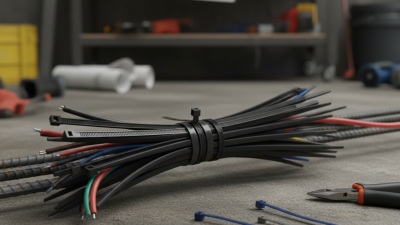
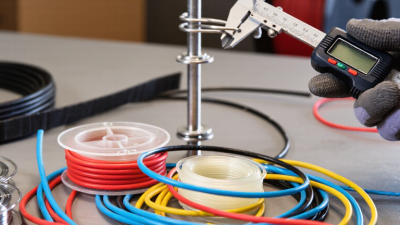
What Are the Best Heavy Duty Zip Ties From China?
Choosing the best heavy duty zip ties from China requires more than comparing prices. Real performance depends on nylon grade, tooth design, locking strength, and storage conditions. A tie may look thick but fail after prolonged sunlight or heat exposure. That detail matters. This introduction frames a practical review for buyers, engineers, installers, and distributors. It focuses on products used for cable bundling, automotive repairs, construction sites, outdoor equipment, and industrial maintenance.
Reliable evaluation starts with measurable evidence. We will examine tensile ratings, usable length, bundle diameter, head structure, and resistance to ultraviolet exposure. Material information should be clear, preferably identifying nylon 66 and stabilizing additives. Factory quality systems also deserve attention, including mold consistency, batch inspection, packaging control, and traceable test records. Supplier communication is equally important. A dependable manufacturer explains tolerances, production capacity, sample policies, and realistic lead times without hiding weak points.
China offers a wide range of heavy duty zip ties, from economical general-purpose models to reinforced versions for demanding environments. However, “best” is not universal. A black UV-resistant tie may suit outdoor wiring, while a natural nylon tie may fit indoor assembly. Buyers should verify claims with samples and application testing. Some specifications remain vague, and that deserves skepticism. This guide compares practical strengths, limitations, and purchasing considerations, helping readers make safer, more informed decisions. The goal is not to praise every supplier. It is to identify dependable value.
Defining Heavy-Duty Zip Ties: 120–250 lb Tensile Ratings Under UL 62275
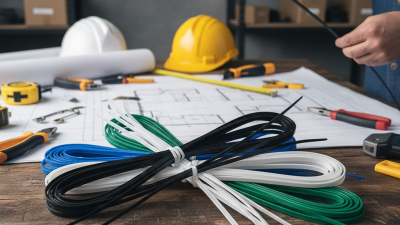
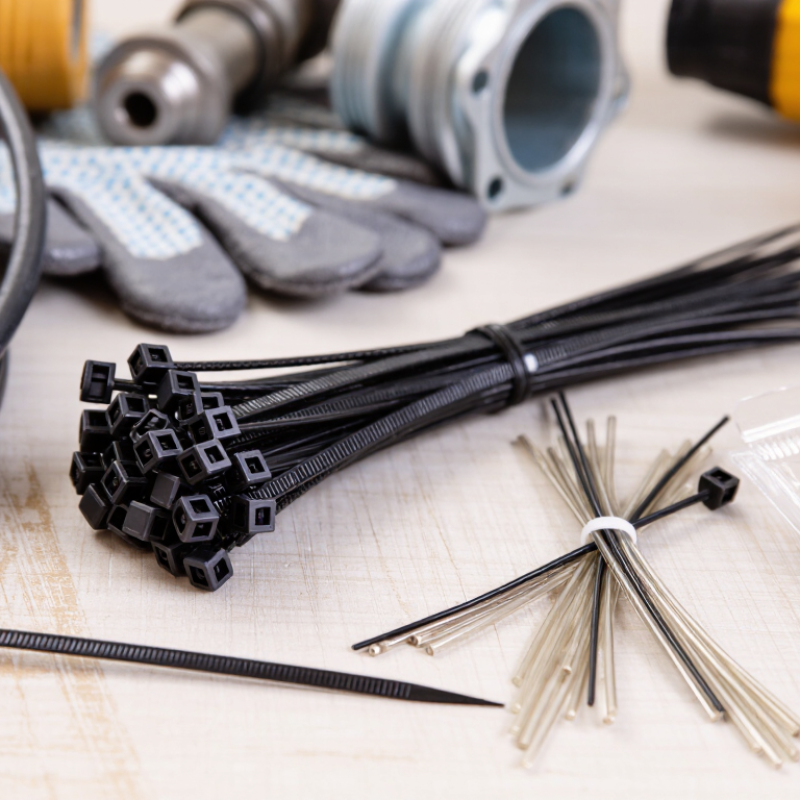
Heavy-duty zip ties from China are often selected for demanding cable management, construction, and industrial installations.
Under UL 62275, tensile ratings from 120 to 250 pounds indicate strong loop performance under controlled testing. However, the number alone does not define quality. Material grade, tooth design, locking-head strength, and production consistency also matter.
A dependable supplier should provide clear test reports, material specifications, and traceable batch information. Nylon 6/6 is common, while UV-stabilized grades suit outdoor use. Check temperature resistance before placing ties near engines, rooftops, or electrical equipment.
A 250-pound rating may look impressive, but it cannot compensate for poor installation or sharp edges.
Field inspections often reveal uneven molding, brittle tails, or locks that slip under vibration. These details deserve attention.
Tips:
Request samples from several production batches. Measure width, thickness, and pull strength. Test ties after heat, moisture, and ultraviolet exposure when relevant. Confirm that the stated rating follows the correct testing method, rather than relying on a supplier’s marketing sheet.
Leave room for thermal movement, but avoid excessive slack. I have found that oversized ties are not always safer; they can create awkward bundles and waste material.
A small weakness in the locking head can matter more than a higher advertised rating. Supplier audits, inspection records, and careful installation guidance make sourcing decisions more reliable.
Comparing Chinese Nylon 6/6 Grades by ASTM D638 Strength Data
What Are the Best Heavy Duty Zip Ties From China?
When comparing Chinese nylon 6/6 grades, ASTM D638 tensile data offers a useful starting point. The test measures tensile strength, elongation, and modulus on molded specimens. It does not directly measure a finished zip tie’s breaking load. That distinction matters.
Unfilled nylon 6/6 often provides a practical balance of strength, flexibility, and processing cost. Heat-stabilized grades can perform better near engines, lighting systems, or electrical enclosures. UV-stabilized material is more suitable for outdoor exposure, though performance depends on the complete formulation. Glass reinforcement may increase stiffness, but it can reduce flexibility and create a more brittle tie.
Look for tensile strength values reported in megapascals, with test conditions clearly stated. Conditioning, specimen type, test speed, and laboratory practice can change the result. Ask for lot-specific certificates, not only a generic technical sheet. Check whether the data covers the actual resin grade used in production.
A tie with impressive ASTM D638 strength may still fail at its head or locking pawl. Mold design, moisture content, injection settings, and flash control influence real performance. Measure finished ties under controlled conditions. Pull several samples from different production lots.
Small details matter. Nylon absorbs moisture. Dry material can test stronger but behave less flexibly. I would also question unusually high figures without elongation data or laboratory identification. Strength alone is not enough.
What Are the Best Heavy Duty Zip Ties From China? Comparing Generic Nylon 6/6 Grades by ASTM D638 Tensile Strength
Representative tensile-strength ranges for commonly supplied, non-branded Nylon 6/6 material categories
Glass-fiber-reinforced Nylon 6/6 generally provides the highest ASTM D638 tensile strength and is therefore better suited to heavy-duty cable ties requiring high load capacity. Unfilled Nylon 6/6 offers greater flexibility, while impact-modified grades trade some tensile strength for improved toughness. The values shown are representative industry ranges in MPa; actual results depend on molding conditions, specimen geometry, moisture conditioning, and the specific material formulation.
Evaluating Heat and UV Resistance Against IEC 62275 Requirements
When evaluating heavy duty zip ties from China, heat and UV resistance deserve more attention than package claims. IEC 62275 provides a framework for cable management systems used in electrical installations. It addresses performance under defined environmental and mechanical conditions. A reliable assessment should begin with the exact product specification, material grade, and intended temperature range.
For high-heat applications, request test evidence showing performance after temperature exposure. Check tensile strength retention, elongation, and signs of embrittlement or deformation. Nylon ties can lose flexibility near their upper service limit. That detail matters around engine compartments, rooftop equipment, and industrial enclosures. “Heat resistant” is not a complete technical statement.
UV exposure is equally important outdoors. Black ties often use carbon-based stabilization, but color alone does not prove durability. Ask whether samples were tested under the relevant UV conditioning method and then mechanically retested. Compare the reported results with the applicable IEC 62275 requirements, including product classification and installation conditions. Laboratory reports should identify samples, batch numbers, exposure cycles, and test dates.
In practical inspections, I also check brittle edges, uneven molding, and inconsistent locking teeth. Small defects can become failure points after months of sunlight. Supplier documents are useful, but independent verification is stronger. I would not accept a certificate without checking its scope and test standard. One limitation remains: field exposure varies widely, so laboratory results cannot predict every climate. That is worth admitting before selecting a tie.
What Are the Best Heavy Duty Zip Ties From China? - Evaluating Heat and UV Resistance Against IEC 62275 Requirements
| Anonymous Configuration |
Material and Stabilization |
Nominal Width |
Declared Operating Range |
Minimum Loop Tensile Strength |
Heat-Aging Retention |
UV Exposure Retention |
IEC 62275 Evaluation |
HD-01
General-purpose heavy duty |
Nylon 6/6, heat-stabilized |
9.0 mm |
−40°C to +85°C |
80 kgf / 785 N |
82% |
76% |
Conditional
Requires product-specific evidence |
HD-02
Outdoor black heavy duty |
UV-stabilized Nylon 6/6 with carbon black |
9.0 mm |
−40°C to +85°C |
90 kgf / 883 N |
86% |
90% |
Strong candidate
Subject to conformity testing |
HD-03
Extra-wide outdoor tie |
UV-stabilized Nylon 6/6 with carbon black |
12.7 mm |
−40°C to +85°C |
120 kgf / 1,177 N |
88% |
91% |
Best mechanical margin
Verify the applicable tie type |
HD-04
High-temperature outdoor tie |
Heat-stabilized Nylon 6/6, UV additive |
9.0 mm |
−40°C to +105°C |
85 kgf / 834 N |
91% |
84% |
Best heat balance
Confirm aging report and lot traceability |
HD-05
Releasable heavy duty design |
UV-stabilized Nylon 6/6 with molded release tab |
9.0 mm |
−40°C to +85°C |
70 kgf / 687 N |
79% |
87% |
Application-dependent
Release mechanism may reduce strength |
HD-06
Economy black outdoor tie |
Nylon 6/6, black pigment; UV additive not verified |
7.6 mm |
−40°C to +85°C |
55 kgf / 539 N |
73% |
61% |
Weakest option
Not recommended for critical outdoor installations |
Technical note: IEC 62275 evaluates cable ties according to the applicable product construction, declared performance, mechanical strength, environmental conditioning, and installation requirements. It does not establish one universal tensile-strength value for every heavy-duty tie. The retention figures above are engineering screening values for comparison and should not be treated as certification results.
Recommended verification before purchase: request a lot-specific test report, material declaration, tensile-strength results before and after heat aging, UV-exposure results, dimensional inspection records, and evidence that the tested construction matches the supplied cable ties.
Checking Supplier Quality Through ISO 9001, RoHS, and REACH Compliance
What Are the Best Heavy Duty Zip Ties From China?
A heavy duty zip tie should survive load, heat, moisture, and rough handling. Supplier paperwork deserves the same inspection. The ISO Survey 2023 reported more than 1.2 million ISO 9001 certificates worldwide, showing the standard’s broad industrial use. However, an ISO 9001 certificate confirms a quality management system, not automatic product strength. Ask for the certificate scope, valid dates, audit body, and manufacturing site.
Look closer.
For nylon ties, request batch-based tensile test reports, material identification, and accelerated aging results. A credible report should show sample numbers, test methods, and laboratory details. RoHS compliance should include restricted-substance testing, not only a printed declaration. REACH requires suppliers to communicate information about substances of very high concern when applicable. Check the current ECHA candidate list and request a signed declaration tied to the exact resin and color additive. Generic documents are weak evidence.
In practice, I would compare samples from two production batches. Measure strip width, locking-head consistency, insertion force, and break load.
Inspect brittle edges after heat exposure. One overlooked detail can matter.
Some suppliers provide excellent samples, then alter material ratios during volume production. That is where my confidence would drop. Use purchase specifications, retained samples, and random third-party testing before shipment. Compliance documents build trust, but repeatable physical results prove whether the ties are genuinely heavy duty.
Selecting Tie Width, Length, and Head Design for Installation Loads
Choosing the best heavy duty zip ties from China starts with the installation load, not the lowest quoted price. A 9-millimeter tie offers more holding strength than a 4.8-millimeter model, but it also needs more clearance. Measure the bundle twice. For thick cable groups, select a width that resists twisting under vibration. For lighter routing, an oversized tie can waste space and complicate removal. I have found that installers often choose length by bundle diameter alone. That misses the locking head and required overlap. Leave several teeth engaged after tightening. More is safer.
Length should cover the bundle, the mounting point, and the tool’s access angle. A tie that barely reaches may pass a bench check and fail during field installation. For outdoor or warm machinery areas, ask for heat-stabilized, UV-resistant nylon 66 with a published operating range. Head design matters too. Low-profile heads fit narrow channels and reduce snagging. Wider heads spread pressure across softer insulation. Ball-lock heads can tighten quickly, while pawl designs may provide more consistent engagement across batches. Check tensile data, flammability information, dimensions, and lot traceability before ordering. Request samples from production, not only showroom pieces.
A practical trial uses the real conduit, gloves, tool, and vibration conditions. Inspect cut edges; sharp tails can damage nearby insulation. Pull testing helps, but it cannot copy every installation error. I would not trust one successful sample. Compare several lots and record break points, head cracks, and whitening from over-tightening. Suppliers that answer clearly and provide inspection records are easier to rely on. One detail is easy to overlook: storage humidity can affect nylon performance. Keep cartons sealed and review them before use. The strongest specification can still fail when the installer cannot position the head.