Heavy duty cable ties look simple, yet their failure can loosen a cable bundle, damage insulation, or interrupt equipment. The choice depends on more than width. Material, tensile strength, temperature range, UV exposure, and fastening method all matter. A tie supporting a warm cable tray indoors may not suit an outdoor installation exposed to sunlight and rain. Small parts. Serious consequences.
Grand View Research estimated the global cable-tie market at about USD 1.2 billion in 2022 and forecast 6.4% annual growth from 2023 to 2030. That figure covers cable ties broadly, not heavy-duty products alone. It signals growing demand, but it cannot tell buyers which tie will perform best in a specific setting. IEC 62275 also provides an important reference for cable ties used in electrical installations. For practical selection, compare manufacturer specifications with the load, environment, and installation method.
Maurus C. Logan, the engineer widely credited with developing the modern cable tie, offers a relevant historical connection to this product category. However, I cannot verify a reliable quotation from him specifically about choosing heavy duty cable ties, so I will not invent one. That gap matters. Product claims and expert quotations should be traceable to their original sources. This guide will compare common types, including nylon, stainless-steel, releasable, and UV-resistant ties, while noting where specifications and real-world conditions deserve a second look.
What Are the Top Types of Heavy Duty Cable Ties?
What Makes a Cable Tie Heavy Duty?
“Heavy duty” is not one universal grade. Check the stated minimum loop tensile strength: it measures how much force a closed tie can withstand before failing. IEC 62275:2022 sets performance and test requirements for cable ties, including tensile-strength testing. For scale, a 540 N rating is about 121 lbf. That figure is an example, not a universal cutoff. Compare ratings tested on the same basis, and do not confuse tensile strength with the load a tie can safely carry in every installation.
Material and dimensions matter, too. A wide, thick tie can distribute load better around a bundle, while nylon ties may lose performance with heat, ultraviolet exposure, or chemicals. Stainless steel ties suit some harsh environments, but they still need the correct grade and installation method. Check the product’s temperature range, material, width, and any UV or chemical-resistance claims against the actual site conditions. A tie securing a vibrating cable bundle near a warm motor faces different demands from one used indoors. The label alone can mislead. I would verify the test rating and environment first, then choose the tie; even careful selection cannot fix poor installation.
What Are the Top Types of Heavy Duty Cable Ties?
Which Materials Are Used in Heavy-Duty Cable Ties?
Material choice affects a cable tie’s strength, flexibility, and service life. Nylon 6/6 is widely used for general heavy-duty applications. It offers good tensile strength and resists abrasion, making it suitable for securing thick cable bundles in workshops or equipment cabinets. However, standard nylon can absorb moisture and become less rigid. That detail matters outdoors.
Nylon 6/12 absorbs less moisture and often stays more flexible in damp conditions. For sun exposure, look for UV-stabilized nylon; for warmer settings, heat-stabilized grades may be more appropriate. Stainless steel ties are another option where heat, corrosion, or mechanical damage is a concern. Grade 316 generally offers better corrosion resistance than grade 304, but it may cost more. No material fits every job. I would check the environment before focusing on a strength rating alone.
Tips: Match the tie material to moisture, sunlight, and temperature. Check the specified operating range and tensile rating, then confirm the bundle size. For metal ties, inspect edges and consider a coated design to help protect cable jackets. Small details count. A tie that is strong on paper can still be the wrong choice if it pinches insulation or cannot handle the site conditions.
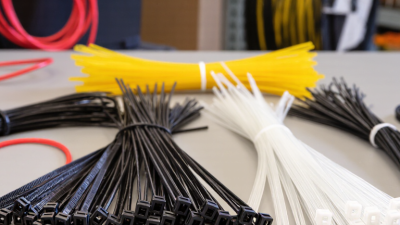
Heavy-duty cable ties differ by material, release design, and exposure rating. Standard nylon 6/6 ties suit dry indoor bundles, while UV-stabilized nylon handles outdoor sunlight better. Heat-stabilized grades are intended for warmer enclosures; many industry material data sheets place their upper service range near 105°C, though the exact limit depends on the formulation. Check the stated temperature rating, not just the tie’s appearance. Small detail. A dark color alone does not prove UV resistance.
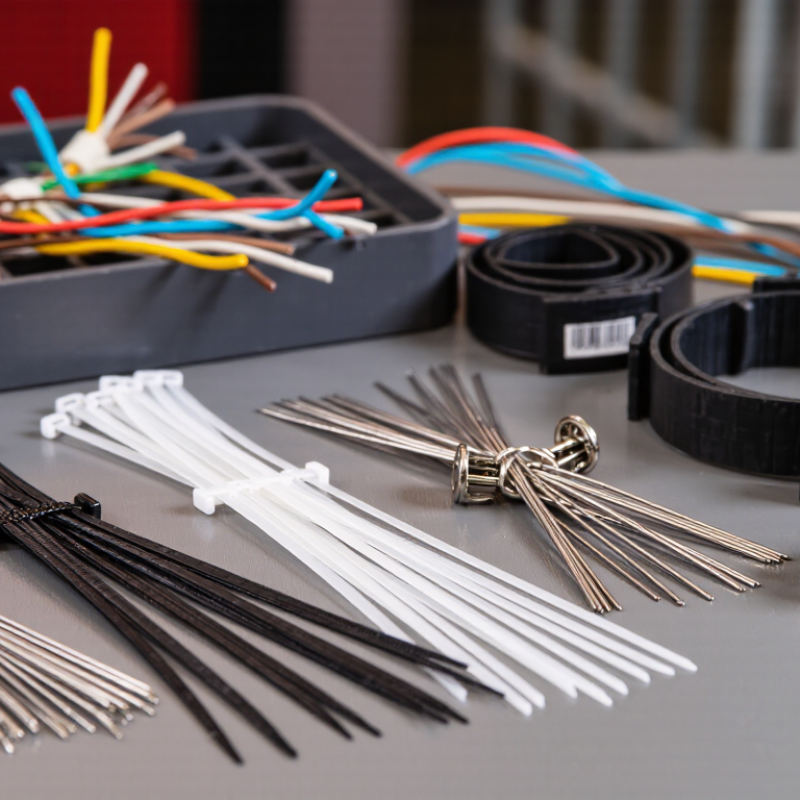
For corrosive, wet, or high-temperature locations, stainless-steel ties offer greater resistance than ordinary nylon. Coated versions can reduce abrasion against cable jackets. Releasable heavy-duty ties work well where technicians need to add or remove wires during maintenance, but their locking heads may be bulkier. IEC 62275:2018 and UL 62275 provide test frameworks for cable-tie performance, including loop tensile strength; compare the listed rating in newtons or pounds under the same test basis. A 1,000 N rating is about 225 lbf. Still, “heavy-duty” is not one universal class. Bundle weight, sharp edges, vibration, and installation tension can change the real result. I would verify the cable jacket compatibility, too. That step is easy to overlook.
Typical continuous service-temperature ranges by material type (°C)
Nylon 6/6 ties are common for general-purpose bundling, while UV-stabilized and heat-stabilized grades are formulated for particular environments. Stainless-steel ties suit demanding temperature and exposure conditions. These are representative material ranges; exact limits vary by grade, coating, and tie design.
Heavy-duty cable ties are not one-size-fits-all. Specialty materials matter when heat, sunlight, moisture, or frequent access can weaken a bundle. For outdoor runs, UV-stabilized nylon helps resist sunlight damage. Still, check the rated service temperature; a sunny rooftop can become much hotter than the surrounding air.
Stainless-steel ties suit demanding areas where strength and resistance to corrosion are important. The grade matters, though: salty spray or chemical exposure may require a more suitable alloy. For warm equipment enclosures, heat-stabilized nylon can retain strength better than standard nylon, but it is not meant for unlimited heat. Check the specification.
Need to reopen a cable bundle? Releasable heavy-duty ties allow adjustment without cutting, which can reduce waste during maintenance. Their locking heads still need careful inspection after repeated use. In washdown or damp spaces, choose ties rated for the actual moisture and chemical conditions, not just ones described as “weather-resistant.” That label can be vague. Match the tie’s load rating to the bundle, allow room for expansion, and avoid pulling it so tight that it crushes insulation. A small test installation can reveal problems before the whole run is secured.
| Cable Tie Type | Typical Material or Feature | Best-Suited Conditions | Key Advantages | Important Considerations |
|---|---|---|---|---|
| Heavy-Duty Standard | Wide-body nylon 6/6 construction with a locking head and pawl | Indoor bundling of heavier cable groups, conduit, and general industrial installations | Strong, lightweight, corrosion-resistant, and available in a range of lengths and widths | Capacity varies by dimensions and design. Check the specified minimum loop tensile strength and do not treat it as a working-load rating. |
| UV-Resistant Outdoor | UV-stabilized nylon, commonly black nylon 6/6 with carbon black | Outdoor exposure to sunlight, such as solar installations, outdoor enclosures, and exposed cable runs | Designed to resist ultraviolet degradation better than standard indoor-grade nylon | UV resistance does not make a tie immune to aging. Select a product rated for the expected exposure and replace damaged ties. |
| Heat-Stabilized | Heat-stabilized nylon compound | Warm environments, including some equipment areas and cable routes exposed to elevated temperatures | Formulated to retain useful mechanical properties for longer at elevated temperatures than general-purpose nylon | Temperature limits depend on the specific tie and exposure duration. Check the product’s continuous-use and installation temperature ratings. |
| Cold-Weather | Impact-modified or otherwise cold-rated nylon formulation | Outdoor work and installations handled or operated in low-temperature conditions | Designed to reduce brittleness and cracking risk compared with standard nylon in cold conditions | Low-temperature performance differs by formulation. Follow the stated installation temperature range and avoid impact or over-tightening in the cold. |
| Stainless Steel, Ball-Lock | Stainless steel strap with a locking ball mechanism; available in different stainless grades | High-temperature, outdoor, or demanding industrial applications where polymer ties may not be suitable | Metal construction offers high strength and resistance to heat; stainless grades can provide corrosion resistance | Choose the steel grade for the specific environment. Installation often requires a tensioning tool, and cut edges can be sharp. |
| Coated Stainless Steel | Stainless steel strap with a protective polymer coating | Installations where the metal tie could abrade, mark, or contact insulated cables or sensitive surfaces | The coating can help reduce direct metal contact and protect the bundle from abrasion | Inspect the coating for damage and confirm compatibility with the operating temperature, chemicals, and outdoor exposure. |
| Heavy-Duty Releasable | Reusable or releasable locking design, usually made from a durable polymer | Temporary bundling, maintenance work, or cable groups that need to be adjusted and reopened | Can be released and reused where the design allows, making changes easier than with a one-way tie | Releasable designs may not match the holding capacity of comparable one-way ties. Verify the rating and reuse instructions for the intended application. |
Selection note: Heavy-duty ratings and temperature limits are product-specific, not universal. Check the tie’s published specifications, environmental compatibility, and installation guidance before use.
Choosing a heavy duty cable tie starts with the conditions around the bundle, not just its diameter. For indoor electrical cabinets, a standard nylon tie may work when temperatures and loads stay within its rated limits. Outdoors, sunlight can make ordinary nylon brittle over time, so a UV-resistant type is often a better fit. Check the product’s temperature and chemical-resistance specifications; “heavy duty” alone does not describe every environment.
For machinery, vehicles, or areas with vibration, consider a tie designed for higher tensile strength and secure locking. Stainless steel ties suit hot, exposed, or corrosive settings when their material grade matches the environment. They can have sharp edges, though, so use suitable handling precautions and protect nearby cables from abrasion. Need to release or reposition the bundle during maintenance? A releasable tie can save time, but confirm its locking strength suits the job.
Measure the bundle and leave room for later additions. Choose a tie length that closes without forcing the locking head against a surface, and avoid crushing insulation by pulling too tightly. A mounting-head tie can help secure cables to a panel, while a standard tie may be simpler for a free-hanging bundle. Test a sample under actual conditions when failure would matter. There is no perfect type for every installation, and a tidy bundle can still hide a poor match.